

Most restaurant table manufacturers can show you a good photograph. Far fewer can show you a flatness tolerance, a base weight chart and a packing drawing. That gap is where a table order goes wrong, because a top that looks identical in two quotes can arrive at two completely different qualities.
This guide covers what to verify before you place the order: the specification, the top, the base, the finish, the testing, the lead time, the packing and the payment terms. It is written from the production side, so it names the checks that actually change what arrives on the pallet. Use it as a script for the conversation with any restaurant table manufacturer on your list.
Before ordering from restaurant table manufacturers, confirm five things in writing: the full top build-up with thickness tolerance, the base weight against the top size, a signed finish sample with a batch reference, the test report for the standard your market requires, and the packing method for tops and bases. Then agree an inspection right before the balance payment falls due.
Contents
- Restaurant Table Manufacturers, Traders and Importers
- The Specification You Should Receive
- Tabletop Construction: What to Verify
- Bases, Columns and the Wobble Test
- Finish, Colour Batching and Samples
- Testing, Certification and Compliance
- Capacity, Lead Time and Minimum Order
- Packing, Loading and Transit Damage
- Payment Terms and Inspection Rights
- Auditing the Factory, in Person or Remotely
- The Restaurant Table Manufacturers Checklist
- Red Flags Worth Walking Away From
- FAQ
Restaurant Table Manufacturers, Traders and Importers
The first question is not about price. It is about who actually makes the table, because that single fact decides how much control you have over every later answer.
Companies presenting themselves as restaurant table manufacturers fall into three groups. Telling them apart takes about two minutes, so do it before you discuss anything else.
The Three Kinds of Supplier
A factory owns the machinery and the people. Consequently it can change a leg profile, hold a colour, or split a shipment, since nothing has to be renegotiated with a third party.
A trading company buys from several workshops and resells under one name. That model is not automatically bad, and good traders do exist. However, they cannot promise a tolerance they do not control, and their samples often come from a different workshop than the production run.
An importer holds stock and ships from a warehouse. Lead times are short, but customisation is usually impossible, and the specification is whatever was bought a season ago.
Three Questions That Reveal the Answer
Ask which machine cuts the top. A real factory answers immediately, naming a beam saw or a CNC router, and often adds the brand without being asked.
Next, ask for a photograph of the current production floor with today’s order on it. Traders send catalogue images instead, because they have nothing else to send.
Finally, ask what happens if you change the top size by two centimetres after the deposit. Factories quote a small cost and a short delay. Intermediaries go quiet for two days, since they have to ask somebody else.
Why This Changes Your Price and Your Lead Time
Every layer between you and the machine adds margin and adds delay. More importantly, it adds distance between your complaint and the person who can fix it.
Our wider guide to restaurant furniture manufacturers covers how to audit a supplier across chairs, booths and tables together. This page stays on tables, because tables fail for reasons that seating never does.
The Specification You Should Receive
Serious restaurant table manufacturers send a specification, not a price list. Two quotes are only comparable when the specification behind them is identical. Otherwise you are comparing a price against a photograph, which is how most bad table orders begin.
What a Complete Table Specification Contains
A proper document from restaurant table manufacturers names the core material and its thickness, the facing, the edge treatment, the finish system and the number of coats. It then names the base type, its material, its section, its plate size and its weight.
After that it should state tolerances. Thickness, diagonal squareness, flatness across the top and height from floor to top surface all need a number with a plus and a minus beside it.
Finished height deserves particular attention, since it has to work with the chairs you already own. Our guide to dining table and chair height explains the clearance that decides whether guests sit comfortably.
Finally it should state what is included: fixings, levelling feet, spare parts and assembly instructions. Buyers routinely discover that bolts were quoted separately, which sounds trivial until a container arrives without them.
The Lines Buyers Forget to Ask For
Moisture content of the timber is the most commonly missing line. So is the adhesive class used in lamination, which decides whether a top survives a humid dining room.
Edge radius is another. A one millimetre radius chips; a two millimetre radius survives service. Since the difference costs almost nothing at the factory, it is worth specifying rather than hoping.
The last forgotten line is the underside. Many suppliers finish only the visible face, and an unsealed underside absorbs moisture unevenly, which is what makes a top cup within a year.
| Line | What to ask for | Typical answer | Why it matters |
|---|---|---|---|
| Top thickness | Nominal plus tolerance | 25 mm ±1 mm | Edge banding fit |
| Flatness | Max deviation over 1 m | ≤1.5 mm | Wobble and glass rock |
| Moisture content | Percentage at despatch | 8–10% | Cupping and splitting |
| Edge radius | Millimetres | 2 mm | Chip resistance |
| Underside | Sealed or raw | Sealed, same system | Balanced moisture |
| Base weight | Kilograms per unit | 12–28 kg | Tip resistance |
| Fixing centres | Plate size and hole pattern | 300 × 300 mm | Top support |
| Levelling feet | Adjustment range | 10–15 mm | Uneven floors |
Tabletop Construction: What to Verify
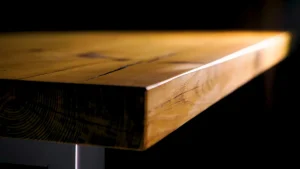
A tabletop is a sandwich, and the price sits inside the layers rather than on the surface. Restaurant table manufacturers know this, which is why the build-up is the section buyers should read first. Two tops with the same photograph can therefore differ by half in cost and by years in life.
Core, Facing and Edge
Ask what the core is: solid timber, blockboard, MDF, plywood or a compact laminate slab. Then ask what covers it, and whether the facing wraps the edge or stops short of it.
Each build behaves differently in service. We make solid wood table tops, veneered tops, compact laminate tops and marble tops, and every one of them carries a different build-up sheet.
Edge failure is the most common tabletop complaint we see. Because the edge takes every trolley knock and every chair back, a poorly bonded band lifts long before the surface wears.
Our guide to restaurant table tops and bases compares the materials themselves in detail. Use it to choose the material, then use this page to check that the chosen material is actually built correctly.
Thickness Tolerance and Flatness
Thickness tolerance matters because the factory cuts edge banding to a fixed width. When the panel runs thin, the band sits proud, and when it runs thick, the band leaves a line. Our guide to table top edge profiles covers the constructions that avoid a bond line at the impact point altogether.
Flatness matters for a simpler reason. A wine glass on a cupped top rocks, guests notice, and no amount of levelling at the base will correct a top that is not flat.
Ask who checks flatness, and how often they check it. Serious restaurant table manufacturers check with a straight edge and feeler gauge on a sample from each batch, and they will tell you the frequency without hesitating.
Moisture Content and the Two Readings That Matter
Timber moves with humidity, so the moisture content at despatch decides how a top behaves in your dining room. Eight to ten percent suits most heated indoor spaces.
Good factories measure twice: once when the timber leaves the kiln, and again just before finishing. Therefore ask for both readings rather than a single number on a certificate.
If a supplier cannot answer this, the timber probably arrived pre-dried from a third party and was never checked again. That is exactly the order that splits in a dry, air-conditioned room.
Bases, Columns and the Wobble Test
Guests blame the top for a wobble, yet the base causes almost all of them. So ask restaurant table manufacturers about bases with the same seriousness you bring to tops. The base deserves far more attention than its share of the price suggests.
Base Weight Against Top Size
A base has to resist a guest leaning on the far edge of the top. As the top gets wider, the leverage grows, so the base must get heavier or wider in step.
A 60 cm square top is happy on a light column. An 80 cm round top needs noticeably more mass, and a 70 by 120 cm rectangle usually needs twin columns or a heavier cast plate.
Ask restaurant table manufacturers for a weight figure per base and the maximum top size they certify against it. A supplier who has actually tested this answers with two numbers, not with reassurance.
Welds, Plates and Fixing Centres
Look at where the column meets the foot. A continuous weld dressed smooth lasts; a stitched weld with grinder marks is a repair waiting to happen.
Then look at the top plate. A small plate on a large top concentrates every load into a narrow patch of the underside, and the fixings eventually pull through.
Fixing centres should suit the top rather than the base catalogue. Consequently a good supplier will offer a larger plate for larger tops instead of using one plate for the whole range.
Our range of restaurant table legs and bases is published with a weight and a maximum top size for each model, precisely so that this comparison is possible before ordering.
Levelling Feet Are Not an Extra
No restaurant floor is flat. Levelling feet with ten to fifteen millimetres of adjustment turn a daily annoyance into a thirty-second fix during setup.
Check that the adjuster is metal rather than moulded plastic, and that it cannot unscrew completely when a table is dragged. Both details cost pennies and save call-outs.
The mismatched base is the most expensive small mistake in a table order
Tops and bases are usually quoted as separate line items, and buyers often accept the cheaper base to bring a total down. The result appears three weeks after opening: tables tip when a guest leans, staff wedge folded card under the feet, and the room reads as low quality no matter how good the tops are. Replacing bases afterwards costs more than the original saving, because you pay freight twice and lose trading days during the swap. Always confirm the certified top size for each base before you compare two quotations.
Saving on the base → replacing every base within a season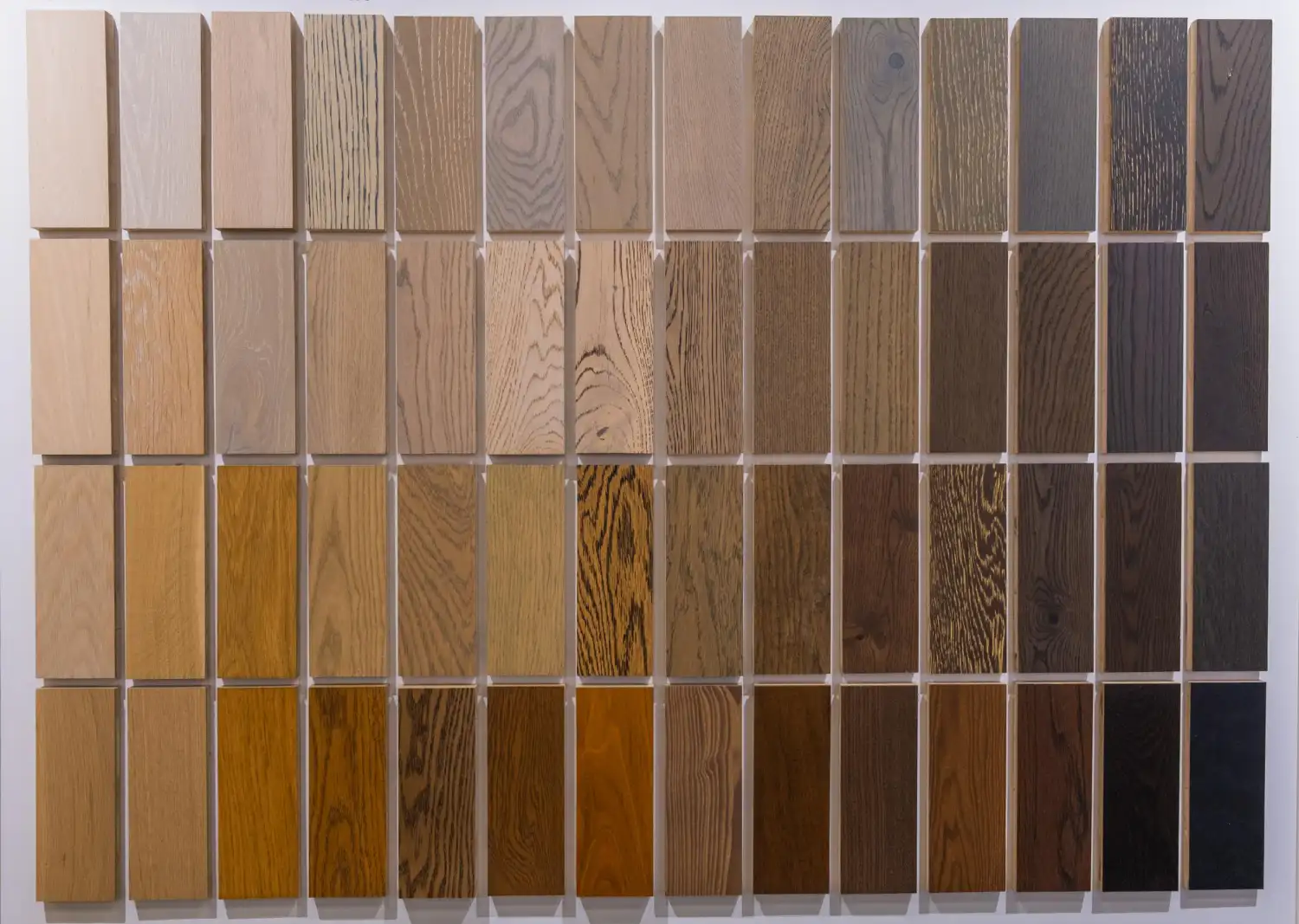
Finish, Colour Batching and Samples
Colour is where friendly suppliers become difficult suppliers, because a finish that matched in the sample rarely matches by itself in production. Handling this properly before the order removes the argument entirely.
Signed Samples and Retained Counter-Samples
Ask for a finish sample on the actual substrate you ordered, not on a generic offcut. Stain behaves differently on oak, on ash and on veneer, so a sample on the wrong material tells you nothing.
Then sign it, photograph it and send it back. The factory keeps one signed piece and you keep the twin, which means any later dispute has a physical reference instead of two opinions.
Record the finish code and the batch number on the order itself. Restaurant table manufacturers who work with contract clients do this as standard, since repeat orders depend on it.
Batch Numbers and Repeat Orders
Factories mix stain in batches, and batches drift. A top ordered in March and a top ordered in November can therefore differ visibly under warm lighting, even from the same recipe.
If you expect to expand, order the second phase early or ask the factory to reserve stain from the same batch. Alternatively, plan the room so later tables sit in a separate zone.
We covered how tone families work across a room in our guide to matching restaurant chairs and tables. The same logic applies here, except the risk sits inside one product rather than between two.
Testing the Finish Before You Approve It
Put the sample through a short abuse test before signing. Red wine for an hour, a hot cup, a coin dragged along the surface and a wipe with your own cleaning product cover most of what service does.
Since your cleaning chemicals vary by venue, test with yours rather than with a generic cleaner. A finish that survives a laboratory can still cloud under an alkaline degreaser. Our notes on cleaning restaurant furniture list the products that damage finishes fastest.
Testing, Certification and Compliance
Restaurant table manufacturers selling into contract markets work under standards that domestic furniture ignores. Meanwhile, insurers and licensing officers increasingly ask to see the paperwork, so it is worth collecting at the order stage.
The Standards That Apply to Tables
EN 15372 covers strength, durability and stability for non-domestic tables, and it is the one to ask for by name. It sets test levels, so ask which level the report covers rather than accepting a bare certificate.
BS 5459 appears in British contract specifications and sets heavier duty expectations. In North America, buyers usually reference ANSI and BIFMA test methods instead.
Fire, Formaldehyde and Food Contact
Fire performance mostly concerns upholstery, yet laminates and lacquers still carry ratings in some jurisdictions. Ask what applies in your market before assuming it does not.
Weather resistance is the equivalent question outdoors. For an outdoor restaurant table, ask about the salt spray hours behind the coating rather than about the colour.
Formaldehyde emission class matters for panel cores. E1 is the common contract requirement, and E0 exists where indoor air quality is specified more tightly.
Where tops meet food directly, such as bar counters and prep-adjacent surfaces, ask about food contact compliance for the surface layer. Not every attractive finish qualifies.
What a Test Report Must Actually Show
A valid report names the laboratory, the test standard, the sample tested, the date and the result against each clause. A certificate with a logo and no clause table proves nothing.
Check that the tested product resembles what you are buying. Reports for a 60 cm café table do not cover a 120 cm banquet top, although suppliers sometimes present them as though they do.
Tops and bases made in our own factory
Solid timber, veneer, compact laminate and marble tops, matched to column, cross and cast bases sized for each top.
Capacity, Lead Time and Minimum Order
Buyers raise capacity questions last, yet those questions cause the most damage. An opening date rarely moves, so a lead time that slips by three weeks is a real financial event.
How a Lead Time Comes Together
A quoted lead time contains material procurement, machining, finishing, curing and packing. Finishing and curing are the stages that stretch, because lacquer schedules cannot be rushed without consequences.
Ask for the breakdown rather than the total. Suppliers who give you five numbers are describing a real plan, whereas a single round number is usually an estimate dressed as a commitment.
Then ask what the number assumes. Most quoted lead times start from finish approval rather than from the deposit, and that difference alone can be two weeks.
Minimum Order Quantity and Mixed Orders
Minimums exist because setup time dominates small runs. Nevertheless, most restaurant table manufacturers will mix sizes within one order if the finish and the build-up stay constant.
Use that flexibility. A room needing twenty square tops, eight round tops and four rectangles is one order at one setup, provided the specification is shared across them.
Work out the size mix from the floor plan before you ask for a price. Our guide to restaurant table spacing shows how to convert a room into a table schedule.
Ask about second-phase minimums too. A supplier who accepts a small top-up order a year later is worth more than one who quotes a slightly lower unit price today.
Packing, Loading and Transit Damage
More restaurant tables suffer damage in transit than in production. Because a top is a large flat panel with vulnerable edges, packing deserves as much scrutiny as the joinery.
Packing Tops Correctly
Ask restaurant table manufacturers exactly how each top travels. Each top needs corner protection, an edge guard and a face layer that will not print into the finish. Foam sheet against a fresh lacquer can leave a texture, so ask what sits directly on the surface.
Tops should ship flat or on edge in a frame, never leaning loose against a wall of the container. Furthermore, mixed sizes need dividers, since a smaller top sliding across a larger one will scratch both.
Bases, Pallets and Container Loading
Bases are heavy and hard, which makes them the most likely thing to damage everything else. They belong at the bottom, boxed individually, with the fixings bagged and taped to the base rather than loose in a carton.
Ask for a loading plan for the container. A supplier who has one will send a diagram, and that diagram tells you more about their competence than any brochure.
Photograph the Load Before It Ships
Request photographs at three moments: packed units, the half-loaded container and the sealed doors with the seal number visible. This costs the factory ten minutes and settles almost every later claim.
Keep those photographs with the packing list. If a claim does arise, the insurer will ask for exactly this evidence, and reconstructing it afterwards is impossible.
Packing is roughly two percent of the order and prevents most of the loss
Proper corner protection, edge guards, individual base boxes and container dividers add a small amount to a table order. A single damaged top, by contrast, costs the item, the freight share, the replacement freight and the delay to opening. On a typical hundred-cover fit-out, replacing four damaged tops after arrival costs several times what upgraded packing would have cost across the whole shipment. Specify the packing method in the order document rather than leaving it to the factory’s default.
2% on packing → avoids replacing 4 tops and a delayed openingPayment Terms and Inspection Rights
Commercial terms protect a good relationship, and restaurant table manufacturers with contract experience expect them. They are not a sign of distrust.
Deposit Structure
A thirty percent deposit with the balance before shipment is the common structure in contract furniture. It funds materials without leaving the buyer fully exposed.
Resist paying the full amount before production. Similarly, be cautious about a supplier who asks for nothing, because that usually means the goods are stock rather than made to your specification.
Inspection Rights and Remedies
Write an inspection right into the order: you or your agent may inspect before the balance falls due. Then define what happens if the inspection fails, since a right without a remedy is decoration.
A workable remedy names a rework window and who pays freight for replacements. Because that clause is rarely used, suppliers accept it readily, and it changes their behaviour during production anyway.
Auditing the Factory, in Person or Remotely
A visit answers questions that documents cannot, particularly about finishing. Still, most buyers cannot travel for every order, so a structured remote audit is the realistic alternative. Distance decides which of the two you get, and our guide to Turkish restaurant furniture covers why proximity makes the visit practical.
What to Look At on the Floor
Watch the finishing area rather than the machinery. Dust control, drying racks and the gap between coats reveal more about quality than a new CNC router does.
Look at the reject shelf. Every real factory has one, and a supplier who claims otherwise is either hiding it or not checking.
Finally, look at how the factory stores finished tops. Tops stacked face to face without interleaving pick up damage before packing even begins.
A Remote Audit That Works
Ask for a single unedited video walk from raw material to packing, filmed in one take. Editing hides the parts you want to see, so specify that condition clearly.
During the call, ask them to measure a top in front of you with a caliper and a straight edge. Restaurant table manufacturers who measure daily will do this without preparation.
The Restaurant Table Manufacturers Checklist
The list below is short enough to send as an email to every one of your shortlisted restaurant table manufacturers. Compare the answers rather than the prices.
| # | Question to send | What a good answer looks like |
|---|---|---|
| 1 | Do you manufacture, or do you buy in? | Names the machines and the floor area |
| 2 | Full top build-up and thickness tolerance? | Layer by layer, with a plus and minus |
| 3 | How is flatness measured and how often? | A method, a limit and a frequency |
| 4 | Moisture content at despatch? | A percentage range, measured twice |
| 5 | Base weight and certified top size? | Two numbers per base model |
| 6 | Which EN or ANSI report covers this table? | Report with clause results attached |
| 7 | Signed sample and retained counter-sample? | Yes, on the ordered substrate |
| 8 | Lead time broken into stages? | Five stages, starting from approval |
| 9 | Packing method for tops and bases? | Described, with a loading diagram |
| 10 | Inspection right before balance payment? | Accepted, with a rework remedy |
Red Flags Worth Walking Away From
Some answers from restaurant table manufacturers are not negotiating positions. They are signals that the order will end badly, so treat them as such.
Vagueness About Measurement
A supplier who will not say how they measure flatness, thickness or moisture is not measuring. Consequently their consistency between the sample and the container is luck rather than process.
Samples That Never Arrive
Sample delays before an order predict production delays after one. Meanwhile, a sample sent from a different workshop than the production line is worse than no sample at all.
One Price for Every Size
Flat pricing across sizes suggests stock rather than manufacture. It also suggests one base for every top, which brings back the wobble problem discussed earlier.
Pressure on Payment
Requests to move the balance forward, or to pay through an unrelated account, deserve a full stop. Legitimate restaurant table manufacturers invoice from the company you contracted with.
FAQ
What should I ask restaurant table manufacturers before ordering?
Ask for the top build-up with tolerances, base weight against certified top size, a signed finish sample with a batch reference, the relevant test report, the staged lead time and the packing method. Then agree an inspection right before the balance payment.
How thick should a restaurant tabletop be?
Most contract indoor tops sit between 25 and 30 millimetres for panel construction, and between 12 and 20 millimetres for compact laminate. Thickness matters less than build quality, so confirm the tolerance rather than chasing a number.
Which standard covers restaurant tables?
EN 15372 covers strength, durability and stability for non-domestic tables in Europe, while BS 5459 appears in heavier British contract specifications. North American buyers usually reference ANSI and BIFMA test methods.
What is a normal lead time for a restaurant table order?
Six to ten weeks is typical for a made-to-order run, counted from finish approval rather than from the deposit. Marble tops and unusual finishes sit at the longer end.
Should I buy tops and bases from the same supplier?
Usually yes, and most restaurant table manufacturers prefer it. One supplier owns the fit between plate and top, the height once assembled and the responsibility if the table wobbles, which is much harder to enforce across two contracts.
How do I compare quotes from two restaurant table manufacturers?
Send both suppliers the same ten-question checklist and compare the answers before the prices. Once the specification, tolerances, base weight and packing match on paper, the remaining price gap becomes a real comparison rather than a guess.
Do I need a factory visit before ordering?
Not always. A structured remote audit with an unedited production walk, live measurement and reference contacts covers most of what a visit would reveal, particularly for a first, smaller order.
More in this category