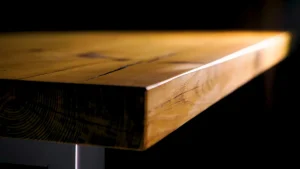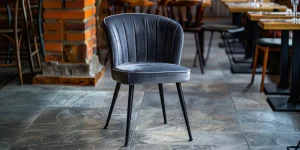

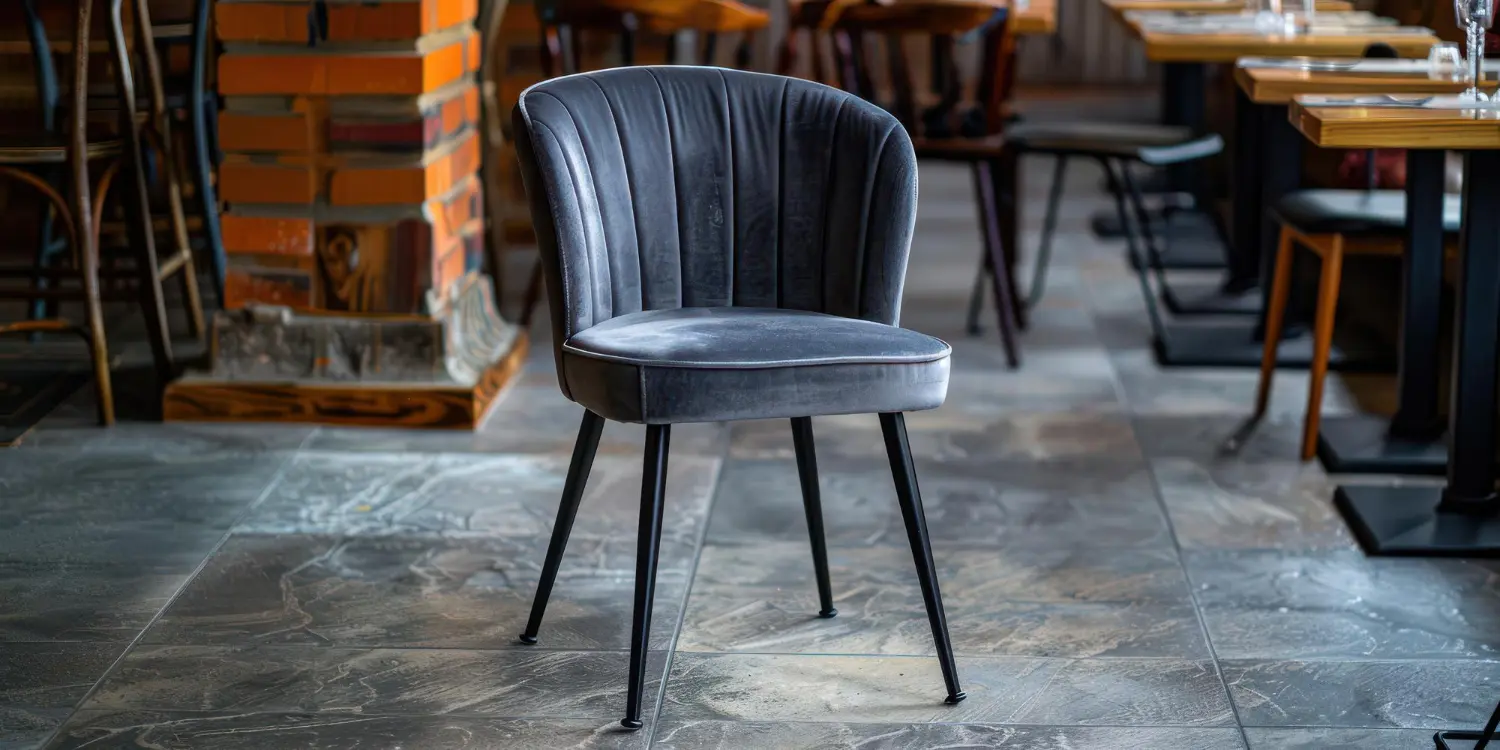
Nobody throws away a chair on its birthday. Consequently restaurant chair lifespan is an awkward figure to quote. A chair leaves the floor when it wobbles under a guest, when it looks tired beside a newer one, or when the seat has gone flat and the room has quietly stopped using that corner.
Because of that, restaurant chair lifespan is not one number. Rather it is four different numbers, and the frame decides which of them arrives first.
Below, this guide sets out what actually ends a chair’s working life, how restaurant chair lifespan gets quoted, how hard use converts years into sit cycles, what each frame type fails at and when, and which checks at year two predict year eight.
In a normally busy dining room, expect roughly 8 to 12 years from a well-jointed solid timber frame, 7 to 10 from aluminium or properly coated steel, 5 to 8 from a laminated plywood shell and 3 to 5 from a moulded polypropylene chair. However restaurant chair lifespan tracks sit cycles rather than calendar years, so a room turning three times a day consumes those figures in roughly half the time. Frames rarely fail first. Instead joints loosen, coatings wear at the leg tips and seat foam collapses long before any structure breaks.
Contents
- The Four Ways Restaurant Chair Lifespan Ends
- Sit Cycles: Why Two Rooms Get Different Years From One Chair
- Restaurant Chair Lifespan by Frame Type
- Solid Timber Frames Year by Year
- Metal Frames Year by Year
- Plywood and Moulded Shells Year by Year
- The Seat Usually Ends Restaurant Chair Lifespan First
- The Year-Two Restaurant Chair Lifespan Inspection
- Decisions Made Before the Chair Exists
- What the Room Does to Restaurant Chair Lifespan
- Mistakes That Shorten Restaurant Chair Lifespan
- FAQ
The Four Ways Restaurant Chair Lifespan Ends
Ask two operators how long their chairs lasted and they will answer honestly and differently. That happens because they are measuring different endings.
Structural End
Firstly, the chair becomes unsafe. A joint opens, a weld cracks, a leg splits, and no guest can sit on it again.
Notably this ending arrives last in almost every case. Furthermore it usually announces itself months in advance through movement rather than noise.
Cosmetic End
Secondly, the chair still works and no longer looks acceptable. Scuffed leg tips, worn arm caps, a stain nobody can lift and a finish sanded thin by cleaning cloths all reach this point together.
In practice this ending governs the front third of most dining rooms. Meanwhile the same chairs remain perfectly serviceable in a function room upstairs.
Comfort End
Thirdly, the seat has collapsed. A pad that started at 60 mm of foam and now measures 45 mm under load has lost the thing guests actually paid attention to.
Consequently guests shift, lean and leave sooner, and nobody writes a maintenance ticket about it. This is the quietest of the four endings and the one guests react to first.
Brand End
Finally, the room changes and the chairs do not fit it any more. A refit, a new menu or a repositioning ends a chair that had years of service left in it.
Above all, decide which restaurant chair lifespan you are planning for before you compare any two chairs. Otherwise a supplier answering the structural question will always sound better than one answering the comfort question.
The chair that passed every test and still left the floor
A frame can hold a guest perfectly at year six and still be gone by year four, because the ending that arrives first is rarely structural. Seat foam softens invisibly, a metre at a time, and the room adapts by seating people elsewhere. Nobody records the moment. Then a manager walks the floor before a busy weekend, sits on four chairs in the window run, and orders replacements that afternoon. That decision was made by 15 mm of lost foam thickness, not by the frame. Consequently the useful question at specification stage is not how strong the frame is, but which component will surrender first and whether you can replace that component on its own.
A frame rated for years → retired by a seat pad nobody measuredSit Cycles: Why Two Rooms Get Different Years From One Chair
Manufacturers quote restaurant chair lifespan in years because buyers ask in years. Nevertheless the chair experiences loading events, and years are simply a convenient wrapper around them.
What One Cycle Contains
A single cover puts a chair through a predictable sequence. Someone pulls it back across the floor, drops into it, shifts twice, leans on the backrest, stands, and pushes it in against the table edge.
Therefore the drag and the push carry most of the damage. Meanwhile the sitting itself is the gentlest part of the whole sequence.
Counting Your Own Room
Multiply covers per day by trading days per year, then divide by your chair count. Afterwards you have cycles per chair per year, which is the only figure that compares two venues fairly.
For instance a 60-seat room serving 120 covers a day across 310 days puts each chair through roughly 620 cycles annually. In contrast a hotel breakfast room with the same chair count and 40 covers a day reaches barely a third of that.
What This Does to Restaurant Chair Lifespan
Because of this gap, published restaurant chair lifespan figures assume a middling room. Additionally they assume trained staff, a level floor and cleaning that does not soak the joints.
So treat any quoted range as a starting point and adjust it by how hard your own room actually runs. Our guide to types of restaurant chairs covers the service-model question that sets your cover count in the first place.
| Room type | Cycles per chair, yearly | Effect on quoted life |
|---|---|---|
| Hotel breakfast, seasonal | 150–300 | Meets or beats the quoted range |
| Neighbourhood restaurant | 400–700 | The range as published |
| Busy brasserie, two sittings | 800–1,200 | Roughly two thirds of it |
| Fast casual, high turnover | 1,500–2,500 | Around half of it |
| Function room, occasional | 80–200 | Storage damage outweighs use |

Restaurant Chair Lifespan by Frame Type
Frame type sets the shape of the ageing curve rather than a single endpoint. Some frames degrade gradually and give warning; others hold perfectly and then go.
Gradual Failers and Sudden Failers
Timber and upholstered frames belong to the first group, since they loosen and soften progressively. By contrast a moulded shell holds its shape until a stress crack appears at the leg junction.
Consequently the two groups need different management. Gradual failers reward inspection, whereas sudden failers reward keeping spares.
Reading the Restaurant Chair Lifespan Ranges
Each figure assumes contract construction, a normally busy room and staff who lift rather than drag. Our comparison of dining chair materials covers which frame to choose in the first place, so this page assumes the choice is made.
| Frame | Typical years | What ends it | Warning given |
|---|---|---|---|
| Solid beech or oak | 8–12 | Joint movement at the seat rail | Long, months of creak |
| Aluminium tube | 8–12 | Coating wear, then pitting | Long, visible |
| Coated steel tube | 7–10 | Corrosion under worn coating | Moderate |
| Laminated plywood shell | 5–8 | Delamination at fixings | Short |
| Moulded polypropylene | 3–5 | Colour fade, then leg junction crack | Very short |
| Upholstered frame, timber base | 6–9 to recover | Foam and covering, not the frame | Gradual |
Solid Timber Frames Year by Year
A hardwood frame is a set of joints holding a guest above the floor. Accordingly the restaurant chair lifespan of a timber frame is the story of those joints.
Years One to Three
Initially nothing visible happens. Underneath, though, the timber is equalising to the room’s humidity, and any frame kilned for a different climate does most of its moving now.
Meanwhile the finish takes its first damage at the leg tips and the top of the backrest. Additionally the front seat edge starts to show where guests grip it to pull the chair in.
Years Four to Six
Now joint movement becomes detectable by hand. Grip the front leg and the seat rail together, twist gently, and a healthy frame gives almost nothing.
Subsequently a frame with dowel-only joints and no corner block develops perhaps a millimetre of play. Because glue lines fail progressively rather than suddenly, this is the point where re-gluing is quickest and holds longest.
Years Seven Onwards
Eventually play becomes audible, and a creak under a shifting guest is the frame asking for attention. Notably a timber chair caught at this stage usually returns to service for several more years.
Conversely a frame left to work loose beyond about 3 mm of play at the rail rarely comes back properly, since the joint faces have worn rather than simply unglued.
The Refinishing Question
Solid timber carries a genuine advantage here. Because there is real material under the finish, a frame can be sanded back and re-lacquered, which resets the cosmetic clock without touching the structure.
Veneered or stained-effect frames offer nothing comparable. Therefore cosmetic wear ends them at the point where a solid frame would simply go for refinishing.
Metal Frames Year by Year
Metal frames almost never fail as metal. Instead they fail as coating, so restaurant chair lifespan here follows the finish rather than the tube.
The Coating Does the Ageing
At first a powder-coated frame looks permanent. However the leg tips meet the floor thousands of times a year, and coating there thins long before anything else shows.
Subsequently moisture reaches bare metal at those points. In aluminium that produces a dull white bloom that stays cosmetic, whereas in mild steel it produces rust that spreads under the surrounding coating.
Where Welds Matter
Welds concentrate stress at the joint between leg and seat frame. Consequently a frame welded all round outlasts one tacked at intervals, and the difference only appears after several years of leaning guests.
Additionally the heat of welding thins any coating applied afterwards if the pretreatment was rushed. So corrosion frequently starts at a weld rather than in open tube.
Aluminium Against Steel
Aluminium tolerates damp rooms, terraces and daily wet cleaning far better. Meanwhile coated steel offers more strength for a given wall thickness and suits dry indoor rooms perfectly well.
Our guide to outdoor bar stools covers what happens when metal frames live outside, where the same ageing runs several times faster.
Repair Reality
A cracked weld can be rewelded, though the frame then needs recoating to stay protected. Because recoating means stripping and baking off site, most operators only do it for a batch rather than a single chair.
Process Insight
Three millimetres of plastic that decide eight years
The glide under a metal leg is the smallest part of the chair and the one that governs how the frame ages. Once a worn glide lets the tube contact the floor directly, three things start at once: coating wears through at the contact point, moisture reaches bare metal, and the leg tip deforms slightly each time somebody drags the chair. Replacing glides on a whole room takes an afternoon and no specialist tools, and doing it every second year keeps the ageing clock where it should be. Conversely a room that has never changed a glide will show corrosion at the leg tips within about five years, and that corrosion is the thing that eventually retires the frame. Our guide to cleaning restaurant chairs covers the routine that goes alongside it.
One worn glide → coating loss, then corrosion, then replacement
Plywood and Moulded Shells Year by Year
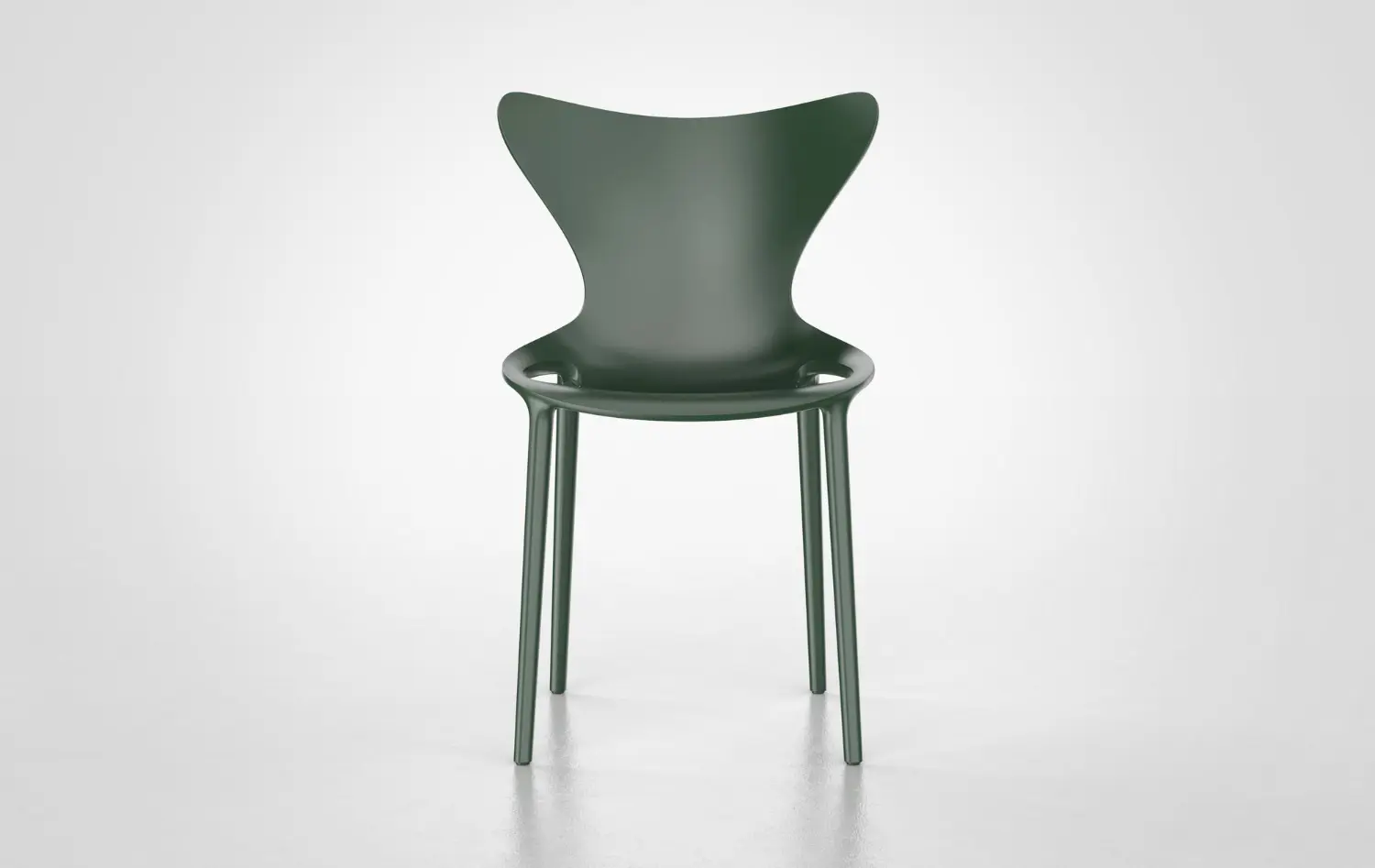
Shell chairs behave unlike frame chairs, because the seat and back are structural rather than carried. That single difference changes the whole restaurant chair lifespan pattern.
Laminated Plywood
A bent plywood shell holds its shape well and ages at its fixings. Specifically the screws or bolts holding shell to base work against the plies, and the layers around them begin to separate.
Furthermore any moisture reaching an unsealed edge accelerates that separation sharply. So a plywood shell in a room that gets mopped hard fails years earlier than the same shell in a dry room.
Moulded Polypropylene
A moulded shell has no joints at all, which is its strength and its limit. Because there is nothing to tighten and nothing to re-glue, the chair either works or it does not.
Colour usually goes first. Additionally daylight fades pigment unevenly, so a window run visibly separates from the rest of the room while every chair still functions.
The Crack Nobody Predicts
Stress cracks appear where the leg meets the shell, and they appear without much warning. Consequently rooms using moulded chairs should hold spares from the original batch rather than plan repairs.
Our range of indoor restaurant chairs covers frame and shell construction across the same finishes, which keeps a mixed room consistent as pieces get replaced.
The Seat Usually Ends Restaurant Chair Lifespan First
Almost every conversation about restaurant chair lifespan starts at the frame and should start at the seat. In practice the seat surrenders years earlier than anything holding it up.
Foam Compression Set
Foam does not wear away; instead it takes a permanent set. A pad returns to slightly less than its original thickness after each guest, and those fractions accumulate.
Therefore measure a pad rather than judging it. Press with a flat hand, hold for ten seconds, release, and compare the recovered thickness against a spare pad from the original order.
What Density Buys
Higher-density foam resists compression set directly, which is why contract seating specifies density rather than softness. Meanwhile a soft low-density pad feels better in a showroom and flattens within two seasons.
Our guide to upholstered and non-upholstered chairs covers the padding decision itself, including where a plain seat outlives a padded one by simply having nothing to collapse.
Covering Wear
Coverings fail on their own schedule, and that schedule is written in the abrasion rating. Additionally seam wear at the front edge usually appears before any surface wear on the flat of the seat.
Our restaurant chair fabric guide sets out the testing behind those ratings. Notably a covering that outlasts the foam beneath it is a common and avoidable mismatch.
Replaceable Pads Change the Arithmetic
A drop-in pad fixed with four screws converts a comfort ending into a maintenance task. Conversely a pad stapled permanently into the frame means the whole chair leaves the room when the foam goes.
So ask how the seat attaches before ordering, not afterwards. That single answer often decides whether the room lasts six years or eleven.
Frames built for the years, with pads you can replace on their own
Contract chairs, stools and fixed seating produced in our own factory, with spare pads and matched finishes held against your original specification.
The Year-Two Restaurant Chair Lifespan Inspection
Waiting for a chair to complain wastes service life, because most repairs are simplest at the point nobody notices. Accordingly a short annual walk-through from year two onwards changes the whole replacement picture.
What to Check and What the Numbers Mean
Pull four chairs from the busiest run rather than sampling the whole room. Since the hardest-used positions age first, they forecast the rest of the room reliably.
| Check | Healthy | Act now | Too late |
|---|---|---|---|
| Joint play at seat rail | Under 1 mm | 1–2 mm | Over 3 mm |
| Seat pad recovered thickness | Within 5% | 10–20% lost | Over 25% lost |
| Glide condition | Full profile | Half worn | Metal on floor |
| Coating at leg tips | Continuous | Thin, no bare metal | Bare or blistering |
| Backrest movement | No travel | Slight, silent | Audible creak |
Turning the Walk-Through Into a Restaurant Chair Lifespan Plan
Two numbers in the middle column mean order glides and spare pads. Similarly two numbers in the right column mean start planning a run of replacements rather than repairs.
Above all, note which position each chair came from. Because window runs, service routes and door-side tables age first, they tell you where next year’s replacements will land.
Decisions Made Before the Chair Exists
Most of the restaurant chair lifespan you eventually get is settled during production, long before anybody sits down. Consequently a handful of specification lines carry more weight than the whole maintenance routine that follows.
How the Joint Is Made
Ask whether the seat frame carries corner blocks, and ask whether they are glued and screwed rather than glued alone. Since corner blocks resist the twisting that opens a joint, their presence changes the shape of the ageing curve directly.
Wall Thickness in Tube
Tube diameter is visible and wall thickness is not, yet the wall does the work. Therefore ask for the wall thickness in millimetres rather than accepting a description of the frame as sturdy.
Coating Pretreatment
A powder coat is only as durable as the preparation beneath it. So ask what pretreatment the frames receive before coating, because that step decides whether corrosion starts at year four or year ten.
Moisture Content and Destination
Timber keeps moving towards the humidity of wherever it lands. Accordingly state your destination climate at enquiry stage and ask what moisture content the kiln targets, which takes one line and prevents a season of loose joints.
Fixings and Spare Parts
Ask whether the seat pad unscrews, whether glides are a standard size, and whether the factory keeps your specification on file. Additionally order spare pads and a small run of spare chairs with the original batch, since matching a finish two years later is far harder than adding pieces now.
Our guide to sourcing from Turkish restaurant furniture factories covers keeping a finish schedule that a repeat order can actually follow.
What the Room Does to Restaurant Chair Lifespan
Two identical chairs in two rooms age differently, and the room explains more of the restaurant chair lifespan gap than the chair does. Four room factors dominate.
The Floor
Hard tile and polished concrete grind glides down quickly, whereas timber and vinyl are gentler. Meanwhile an uneven floor loads two legs harder than the other two, which shows up as joint play years later.
How Staff Move Chairs
Dragging is the single most damaging habit in any dining room. Instead lifting chairs during close-down removes more wear than any product choice, and it needs nothing but a briefing.
Cleaning Method
Water sitting in a joint overnight does more harm than a year of guests. So wipe rather than soak, and dry the underside of the seat rail where cloths usually leave moisture behind.
Stacking and Storage
Function chairs often age in the store rather than in the room. Because a badly built stack loads the top rail of every chair beneath it, stack height limits matter as much for lifespan as for safety.
Our guide to matching chairs and tables covers the clearances that stop chairs knocking against table bases every service.
The close-down routine that removes two years of service
Most dining rooms lose more chair life in the twenty minutes after service than in the hours during it. Chairs get dragged sideways to clear a floor, inverted onto tables in a way that loads the backrest against a hard edge, or stacked six high when the frame is rated for four. None of it looks like damage on the night, and all of it appears three years later as joint play and coating loss at the leg tips. Fixing it needs nothing bought in: lift rather than drag, place chairs seat-down on a cloth rather than balancing them on the back, and post the rated stack height where the stacks actually get built. Consequently the same chairs return two to three additional years of service.
Twenty minutes of close-down → two years of restaurant chair lifespanMistakes That Shorten Restaurant Chair Lifespan
Each of these appears regularly, and each is avoidable at ordering stage. Together they explain most of the gap between quoted and achieved restaurant chair lifespan.
Judging Chairs by the Frame Alone
Buyers compare frames and inherit seats. Since the seat almost always fails first, the comparison answers a question the room never asks.
Never Changing Glides
Worn glides start corrosion, floor damage and dragging noise at once. Nevertheless most rooms never replace one until a floor gets scratched.
Ordering Without Spares
A matching chair is straightforward during the run and difficult afterwards. Therefore add spares and spare pads to the original order rather than the second one.
Soaking Joints During Cleaning
Wet cleaning drives water into exactly the places that hold the chair together. Instead damp-wipe and dry, particularly on timber frames.
Ignoring the First Creak
A creak is a joint asking to be re-glued while re-gluing still works. Meanwhile a chair left creaking for a season usually passes the point where the repair holds.
Assuming Fade Is a Fault
Moulded and coloured chairs fade in daylight, and that is material behaviour rather than a defect. Consequently a window run needs planning for, either by rotating chairs through it or by accepting a shorter cycle there.
Buying for the Quiet Season
A chair chosen while the room runs at half capacity meets a different room in summer. So specify for your busiest month rather than your average one.
FAQ
How long do restaurant chairs last?
In a normally busy room, expect 8 to 12 years from solid timber, 7 to 10 from coated metal, 5 to 8 from a plywood shell and 3 to 5 from moulded polypropylene. However restaurant chair lifespan halves roughly in a high-turnover room and extends in a quiet one.
What ends restaurant chair lifespan first?
The seat pad and the glides fail first in most rooms, and neither is structural. Frames follow years later, which is why replaceable pads and standard glide sizes matter so much at ordering stage.
Does restaurant chair lifespan depend on how busy the room is?
Yes, and more than on anything else. Because wear tracks sit cycles rather than calendar time, a room turning three times a day consumes a quoted range in roughly half the years.
Can a loose restaurant chair be repaired?
A timber frame with under about 2 mm of play at the seat rail usually re-glues successfully and returns for several more years. Beyond roughly 3 mm the joint faces have worn, so the repair rarely holds.
How often should glides be replaced?
Every second year suits most dining rooms, and annually suits high-turnover ones on hard floors. Additionally checking them at close-down takes seconds and catches the worst ones early.
Do stackable chairs last as long as fixed ones?
They can, provided the stack height stays within the rating and staff build stacks squarely. Otherwise the top rail of every chair in the stack takes load it was never designed for.
Is it worth refinishing timber chairs?
Yes, when the frame is solid timber and the joints remain tight. Refinishing resets the cosmetic clock, whereas a veneered or stained-effect frame offers nothing comparable.
What should I ask a supplier about restaurant chair lifespan?
Ask about corner blocks, tube wall thickness in millimetres, coating pretreatment, foam density and whether seat pads unscrew. Furthermore ask whether the factory keeps your finish schedule on file for a repeat order.
More in this category