
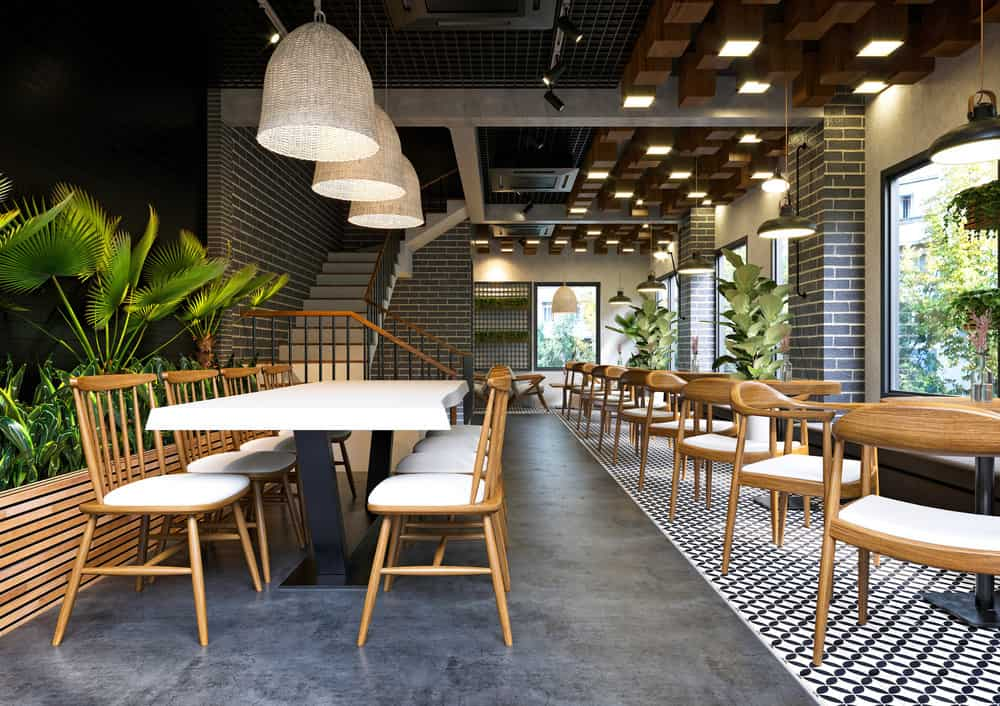
Most restaurant furniture manufacturers you find online are not manufacturers. They are trading companies, importers and catalogue resellers. The difference only becomes visible when you need a non-standard dimension, a matching replacement in year three, or an honest answer about where your chairs are being made. Restaurant Chair Factory is a furniture factory in Istanbul with more than thirty years behind it. We produce contract-grade seating and tables in our own plant, with a separate warehouse for finished stock. This page explains what a real manufacturer can do that a reseller cannot, what we make, and how ordering works. It includes the questions worth asking any supplier before you commit.
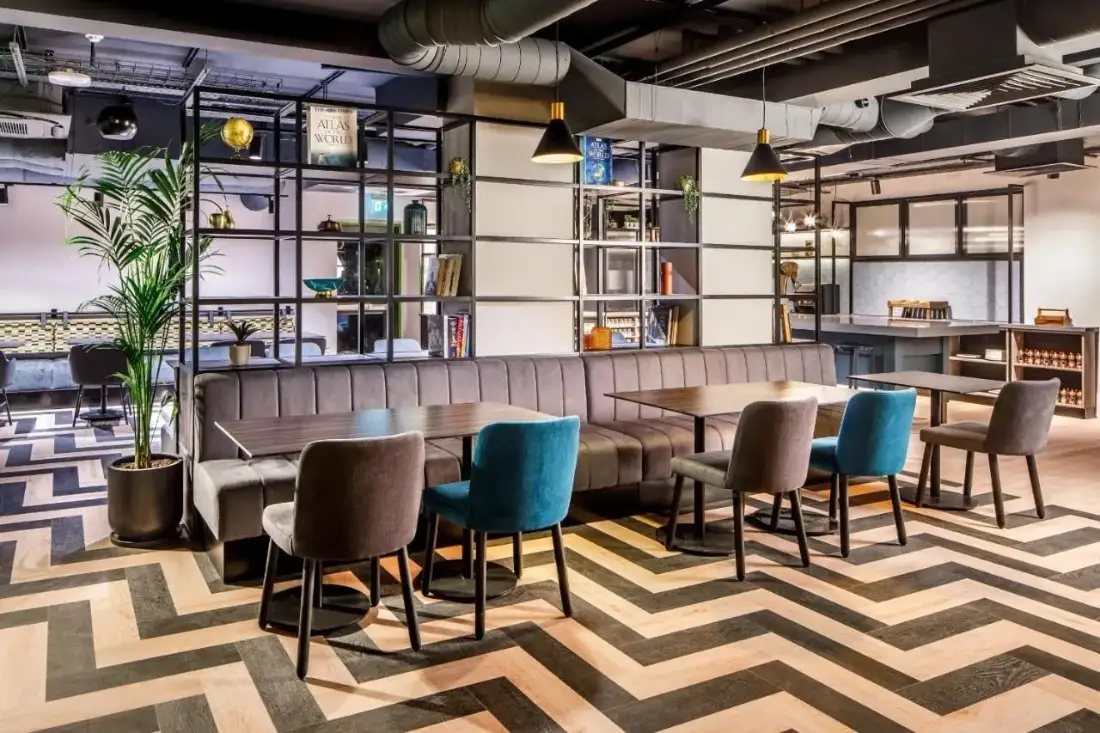
We manufacture restaurant chairs, bar stools, armchairs, booth seating, table tops, table bases and waiter stations in our own factory in Istanbul. Production is 100% in-house, we make dimensions and finishes to order, the minimum order is 50 pieces and production runs 4 to 6 weeks. We export worldwide.
Contents
- Restaurant Furniture Manufacturers, Traders and Resellers
- Restaurant Furniture Suppliers: Manufacturer, Distributor or Agent?
- Our Factory in Istanbul
- What We Manufacture
- Custom Production: Sizes, Finishes and Your Own Designs
- Ordering: MOQ, Samples and Shipping
- What Contract Grade Actually Means
- Materials We Work With
- What Drives the Cost of Contract Furniture
- Buying for Different Project Types
- After Delivery: Spare Parts, Repairs and Reordering
- Eight Questions to Ask Restaurant Furniture Manufacturers
- From Enquiry to Delivery
- FAQ
Restaurant Furniture Manufacturers, Traders and Resellers
Three very different types of business call themselves restaurant furniture manufacturers, and telling them apart is the single most useful thing a buyer can learn. A factory owns the machinery and the production line: frames are cut, jointed, welded, upholstered and finished on its own floor. The trading company owns a catalogue and a relationship with factories it does not control. A reseller owns a website and a warehouse of imported stock.
None of the three is dishonest by definition, and a good trading company adds real value in markets where importing directly is difficult. But the three behave completely differently at the moments that matter. Ask for a seat 3 cm lower to suit an inherited table and a factory changes a cutting list. A trader asks its supplier and often comes back with no. Ask for eight matching chairs two years after the original order and a factory runs them. A reseller sells you whatever is currently in the warehouse.
How Price Behaves Across the Three Types
Price behaves differently too, though not always in the direction people expect. A factory removes a margin layer, which shows on large orders. On a very small order a reseller with stock on the shelf can be faster and cheaper. There is no production run to schedule. The factory advantage grows with order size, with how unusual your requirements are, and with how long you intend to keep the furniture.
The table below sets out where each type is genuinely stronger. Read it before you shortlist suppliers rather than after. The questions in the last column are the ones that separate them, and they are questions a factory can answer immediately.
| Capability | Factory | Trading company | Stock reseller |
|---|---|---|---|
| Owns the production line | Yes | No | No |
| Custom dimensions | Yes — a cutting-list change | Sometimes, via its supplier | No |
| Your own design produced | Yes, from drawings | Rarely | No |
| Matching reorder in year three | Yes — same specification | Depends on its supplier | Whatever is in stock |
| Fabric and finish range | Open — your reference | Catalogue options | Fixed |
| Best on small quantities | No — MOQ applies | Sometimes | Yes |
| Best on full fit-outs | Yes | Middling | No |
| Question that reveals it | “Send a photo from the line” | “Which factory?” | “Can you reorder this?” |
Reordering: The Row That Decides It
One row deserves emphasis. Reordering is where most operators discover which type they bought from, usually two years in, when a chair breaks and the replacement arrives in a slightly different shade. A factory that keeps your specification on file solves that in an email. Nobody else can.
Most search results for “manufacturer” are not manufacturers
Search the term and the first page is dominated by marketplaces and importers. Many are catalogue sites that have never cut a frame. The wording is deliberately loose — “manufacturing partner”, “our production”, “factory direct” — and none of it is checkable from a website. The cost is not the price; it is discovering mid-project that nobody can change a dimension, match a finish, or produce a replacement. Ask one question before you shortlist: where is the workshop, and can I see it?
“Where is your factory?” — the question that shortens most shortlistsRestaurant Furniture Suppliers: Manufacturer, Distributor or Agent?
Most buyers start by looking for restaurant furniture suppliers rather than for a factory. The word is useful, because it covers everyone who can put furniture on your floor. It is also the reason one page of search results mixes four very different businesses.
A supplier is simply whoever invoices you. Behind that invoice sits a manufacturer who owns the production line, a distributor who holds stock of somebody else’s brand, an agent who earns a commission on an order placed elsewhere, or a listing with no inventory at all. All four call themselves suppliers, and all four are entitled to.
How to Tell Restaurant Furniture Suppliers Apart in Ten Minutes
Ask where the factory is and who owns it. A manufacturer names a city and a building. Then ask for a non-standard dimension, such as five centimetres off a seat height. A factory quotes that as a normal job, while a distributor has to check whether the brand offers the option at all.
Finally, ask what happens if you reorder twenty matching chairs in three years. Manufacturers keep the tooling and the specification, so they can. Distributors depend on whatever the brand still produces, and agents usually cannot answer. Therefore this one question separates the four faster than any company profile does.
We are a manufacturer, and we sell direct. So the supplier you buy from and the factory that makes your chairs are the same company, with no margin in between. You can see the full range on our restaurant furniture manufacturer home page.
Our Factory in Istanbul
Among restaurant furniture manufacturers we sit at the factory end of that table. Our guide to Turkish restaurant furniture explains what the country itself brings to a project. Restaurant Chair Factory produces in its own plant in Istanbul, with a separate warehouse for finished goods. Behind it sits more than thirty years of contract furniture experience. First, cutting and shaping run on CNC machinery. That makes repeatable accuracy possible across a production run of a hundred identical frames rather than a workshop’s worth of near-identical ones.
Production is entirely in-house. Frames, upholstery, finishing and assembly happen under one roof, which matters for two practical reasons. Therefore the specification cannot drift between subcontractors. It also means a problem found at inspection can be corrected on the line rather than renegotiated between three companies. That is also why we can photograph your order in production and send it to you before it ships.
Our Group, Showroom and Track Record
We are a sub-brand of Hotel Furniture Concept, a manufacturer and distributor working across hotel, restaurant and café furniture. Overall the group covers bedroom furniture, casegoods, fixed furniture and both upholstered and non-upholstered seating. That background explains why we specify the restaurant range the way we do. It is FF&E for commercial rooms rather than as domestic furniture sold to businesses.
Buyers are welcome at our Istanbul showroom, which holds a wide variety of chairs alongside the fabric range and wood finish combinations. Seeing and sitting on a frame is worth more than any specification sheet. It is the fastest way to settle a decision that would otherwise take weeks of sample shipping. Details and directions are on our about us page.
Thirty years is worth stating plainly because of what it means operationally rather than as a credential. It means the frames in the range have already been tested. They have been through the failure modes a new design discovers in its first two years. Those are the joint that loosens, the finish that chips at the foot, the seat depth that turns out to be two centimetres wrong. A catalogue built over three decades of contract work is a catalogue with those corrections already made. That is a different proposition from a range designed for photographs.
Send us your seating plan and we will quote it
Chair counts, table sizes, finishes and fabrics — priced direct from the factory floor in Istanbul.
What We Manufacture
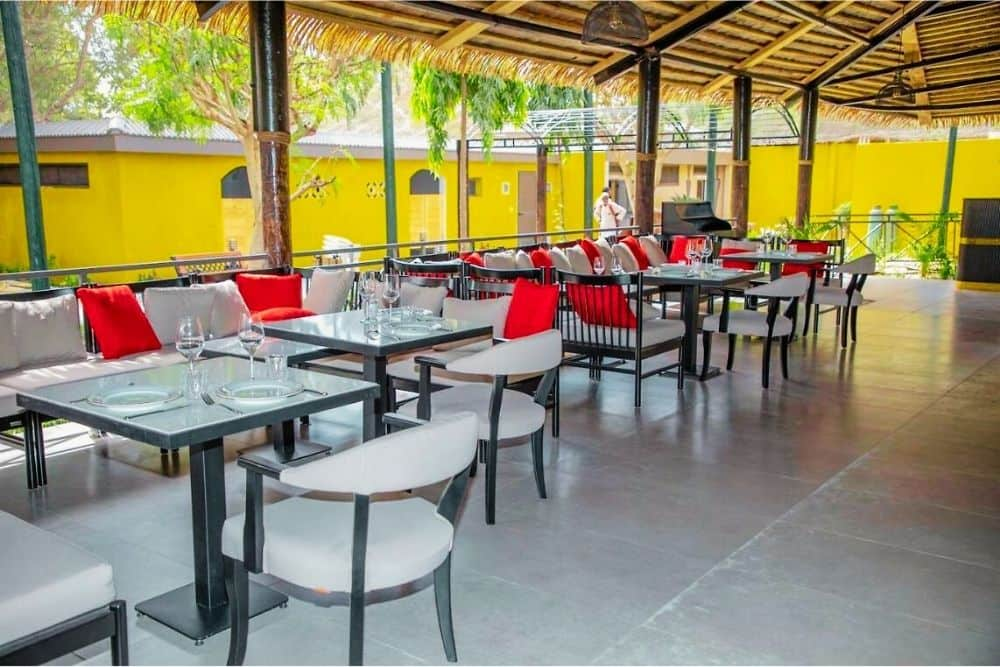
Unlike restaurant furniture manufacturers who specialise in one product group, our range covers a full commercial dining room. That allows one order to furnish a whole venue with matched finishes. Indoors, that means wooden and metal restaurant chairs, armchairs, sofas and bar stools. It also covers table tops in solid wood, HPL compact laminate, marble and MDF with matching bases and legs, plus booth and banquette seating and waiter stations.
Seating is the core. Side chairs and armchairs in beech and other hardwoods, powder-coated and chromed metal frames. Most models come in upholstered and non-upholstered versions, and our guide to upholstered versus non-upholstered restaurant chairs explains which suits which room. Stools come in both counter and bar heights, and our guide to how many bar stools you need covers the count. If you are still deciding on format, our guide to the types of restaurant chairs sets out where each belongs. Our comparison of dining chair materials covers the trade-offs between frames.
We produce tables as tops and bases, specified together. That way the finished height and the underside clearance are right for the chairs going with them. Our guide to restaurant table tops and bases explains the material choices. Sizing runs alongside it: our guide to restaurant table sizes covers how many people fit at each top. The pairing rules are in our guide to dining table and chair height.
Outdoor Furniture and One-Source Ordering
Outdoors, the range runs to powder-coated aluminium chairs, armchairs, sofas and bar stools with weather-rated tops and bases. These are the materials that survive a terrace rather than a season on it, and our guide to outdoor bar stools covers the hardest case of all. We make fixed seating to your floor plan: corner booths, straight banquette runs and button-back benches, sized from your drawing. Finally, waiter stations round out the list. Our guide to the restaurant waiter station covers sizes, placement and what to store inside. They are the item most often left off a specification entirely, as our checklist of what furniture should be in a restaurant explains.
Besides that, covering the whole room from one source has a practical benefit beyond convenience. Finishes match across categories because they come from the same finish run. The stain on a bar stool is the stain on the dining chairs and on the table base, rather than three near-matches from three suppliers. Heights work together because we specify tops, bases and seating against each other rather than assumed. There is also one shipment, one set of documentation and one point of contact if something needs resolving. On a fit-out with an opening date, that is worth more than any individual line price.
See the full production range
Indoor and outdoor chairs, bar stools, armchairs, sofas, tables, booth seating and waiter stations.
Every Product Category We Manufacture
Below is the full production range, grouped the way most fit-outs are actually specified. Each link opens the category with the models we currently produce. If a size or finish is not listed, we still make it to order.
Restaurant chairs
- Indoor restaurant chairs — the full indoor seating range, upholstered and plain.
- Wooden restaurant chairs — solid beech, oak and ash frames.
- Metal restaurant chairs — powder-coated steel and stackable models.
- Outdoor restaurant chairs — terrace seating that handles weather.
Armchairs
- Armchairs — comfort seating for longer covers.
- Wooden armchairs — hardwood arms and shaped backs.
- Aluminium armchairs — light, rustproof and stackable.
Bar stools
- Bar stools — counter and bar heights across materials.
- Wooden bar stools — beech and oak frames with a footrest.
- Metal bar stools — steel frames for heavy turnover.
- Aluminium bar stools — outdoor terraces and poolside bars.
Sofas and fixed seating
- Sofas — modular lounge seating for waiting areas.
- Wooden sofas — hardwood frames with contract foam.
- Aluminium sofas — terrace and garden lounge sets.
- Booth and banquette seating — built to your floor plan.
Tables, tops and bases
- Indoor restaurant tables and legs — tops and bases that we specify together.
- Outdoor restaurant tables — weatherproof tops on stable bases.
- Table legs and bases — cast iron, steel and timber.
- Solid wood table tops — thick surfaces that a joiner can refinish.
- Natural veneered table tops — a real wood face over a stable core.
- HPL compact laminate table tops — heat and scratch resistant.
- Marble table tops — natural stone cut to your sizes.
- Melamine faced MDF table tops — budget indoor surfaces.
- Metal framed table tops — protected edges for heavy use.
Service furniture
- Waiter stations and servants — cutlery drawers and service storage.
Custom Production: Sizes, Finishes and Your Own Designs
Customisation is the practical reason to buy from restaurant furniture manufacturers rather than from stock. In fact it operates at three levels. The simplest is finish. We can produce any model in the range in your stain reference, your powder-coat colour and your fabric, including fabric you supply yourself. This costs nothing structurally and is the change most buyers actually need.
The second level is dimension. We can adjust seat heights, seat widths, back heights, table top sizes and base spreads. That suits an inherited table, a tight aisle or an unusually shallow banquette. This is where a factory separates itself completely from a catalogue: a 3 cm change is a different cutting list, not a different product. It is also the change that most often rescues a project where the joinery is already built.
Your Own Designs and Fixed Seating
The third level is your own design. Send drawings or reference photographs and we will produce them. This is normal work for a contract factory. It is how most hotel and restaurant groups get furniture that nobody else has. Designers and architects specifying for a project are the most frequent users of this route. The process starts with a drawing rather than a catalogue number.
Fixed seating deserves its own note, because it is custom by definition. We make banquettes and booths to a floor plan. The run length, the return angles, the bench depth and the back height all come from your drawing rather than from a standard. Our guide to booth and banquette seating sets out the dimensions that make fixed seating work before you commit to a layout, and our booth seating floor plan guide shows how to survey the room and produce that drawing.
Send the floor plan, not the product list
Buyers usually send a list of models and quantities, and it is the wrong starting point. A floor plan tells a manufacturer the aisle widths and the party-size mix. It also shows where fixed seating would earn its cost and which tables need to combine. That produces a specification that fits the room rather than one that fits the catalogue. It also catches the mismatches early, when they cost an email rather than a container. Send the drawing first and the product list second.
One floor plan replaces three rounds of specification emailsOrdering: MOQ, Samples and Shipping
Most restaurant furniture manufacturers set a minimum order, and ours is 50 pieces. That figure exists because a production run has a setup cost regardless of length. Below roughly that quantity the arithmetic stops working for either side. It applies to the order as a whole rather than to each individual model. A mixed order of chairs, stools and tables reaching 50 pieces works, which is how most single-venue fit-outs come in.
If your project is smaller than that, say so at enquiry rather than assuming the answer. A phased opening, a second venue in the same group or a refurbishment planned in stages can often be combined into one production run and one shipment. Our notes on furnishing a small restaurant on a tight budget cover how to phase a fit-out sensibly. That is better for you on freight as well as on price.
Samples, Lead Time and Shipping
Samples are the step worth taking on any order of consequence. A single chair in your chosen frame, finish and fabric tells you more in ten minutes than a catalogue does in a week. You learn whether the seat height suits your tables, how the fabric behaves, how heavy it is to lift. For buyers who can reach Istanbul, the showroom does the same job faster and across the whole range at once.
Service furniture and stone surfaces each have their own vocabulary and their own upkeep, covered in our guides to what a restaurant servant is and marble table top care.
Fixed joinery and bar counters follow their own rules again. Our guides to bar counter dimensions and corner booth seating cover the two that most often go wrong on site.
Tables carry a few checks that seating does not, including top flatness, base weight and packing method. Our guide to what to check before ordering restaurant tables lists them in order, and our comparison of round, square and rectangular tables helps you settle the shape schedule first.
Production runs 4 to 6 weeks from confirmed specification, and we export worldwide. Furniture ships by container for full fit-outs. The practical planning point is that sea freight time is separate from production time and needs its own allowance in your programme. Confirm both figures in writing at quotation stage and build the schedule backwards from your opening date rather than forwards from the order.
Compare landed cost, not unit price
Quotations from different restaurant furniture manufacturers are rarely comparable as they arrive. One includes freight, one does not; one includes packing for sea, one assumes a pallet; one quotes ex-works and one delivered. Ask every supplier for the same basis: unit price, packing, freight to your port or door, and duties where they apply. The ranking frequently changes. Then add the spares: ordering 5% extra with the original run costs a fraction of a second small order two years later.
Same basis for every quote · then add 5% spares before you compare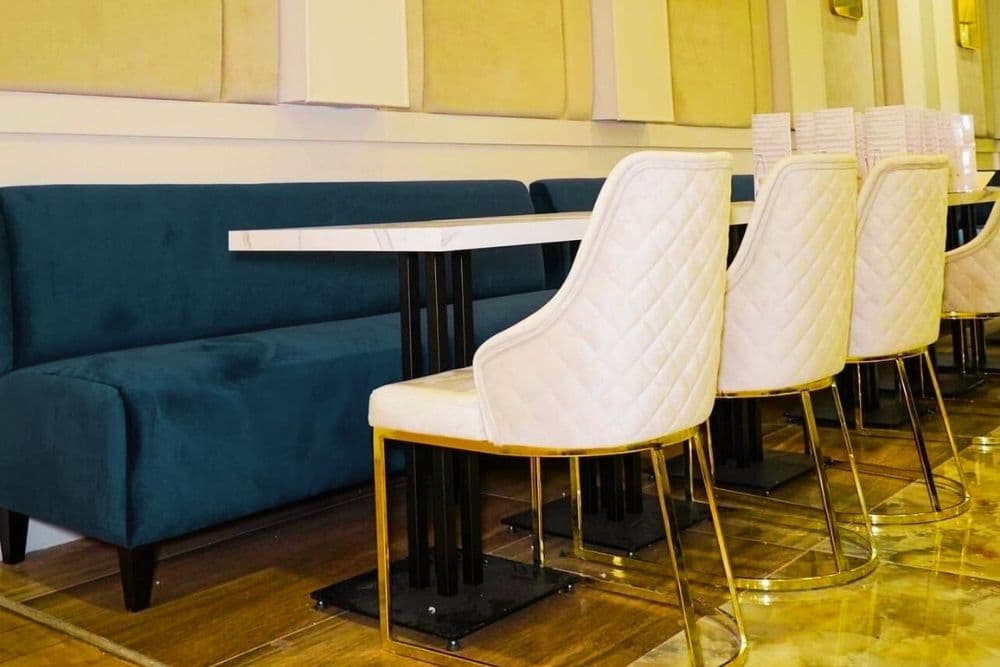
What Contract Grade Actually Means
Every supplier claims contract grade. It is not a marketing phrase, it is a construction standard, and the difference from domestic furniture is structural rather than cosmetic. A restaurant chair is sat on by a different adult every ninety minutes. It is dragged across a floor twice a day, stacked, knocked and cleaned with chemicals no home ever sees. Domestic furniture is built for a fraction of that and fails at the joints inside a year under it.
In seating, the difference is in the joint and the frame section. Mortise-and-tenon legs with glued and screwed corner blocks survive; dowel-only joints with no block loosen. In tables, it is the base weight, the spread and the edge detail. In upholstery, it is the Martindale rating of the fabric. Contract fabric starts around 40,000 cycles, where domestic upholstery is commonly rated at a third of that.
The Standards and How Quality Is Checked
The European standards that define this are worth knowing even if you buy elsewhere. They are EN 16139 for non-domestic seating and EN 15372 for non-domestic tables. Both load and cycle the furniture far beyond domestic use. Ask any supplier which standard their construction is built to and what documentation they can provide. A serious answer tells you a great deal, and so does a vague one.
Quality control matters as much as construction. Because production is in-house, inspection happens on our own line rather than at a supplier’s gate. A fault found at assembly is corrected there. That is the practical value of a single roof. It is not that nothing goes wrong, but that the person who can fix it is standing next to the problem.
There is a simple test a buyer can apply without any technical knowledge. Ask what happens to a chair that fails inspection. A factory describes a specific correction — the joint is re-cramped, the frame goes back to finishing, the batch is held. A trading company describes a commercial process: a claim, a credit, a replacement shipment. Both are legitimate answers, but only one of them tells you the furniture is being made where the conversation is happening.
Materials We Work With
Material choice decides how a chair looks on day one and how it looks in year five. Because of that, we treat it as a specification question rather than a styling one. Below is what we use, and where each option earns its place.
Hardwood Frames: Beech, Oak and Ash
Beech is our default frame timber. It is dense, it takes stain evenly, and it holds a mortise-and-tenon joint under daily commercial load. Oak costs more, yet it gives a stronger grain and a warmer tone once oiled. Ash sits between the two and bends well. We therefore use it where a curved back is part of the design.
All three arrive kiln-dried to a controlled moisture content. That step matters more than most buyers expect. If a supplier dries timber badly, frames loosen once they meet a heated dining room in winter. Therefore we check moisture on arrival rather than on trust.
Metal and Aluminium Frames
Steel gives the highest strength for the lowest section. We powder-coat it after welding, which seals the joints instead of leaving bare metal under paint. For indoor venues with heavy turnover, steel is usually the most economical frame per year of service.
Aluminium weighs roughly a third less and does not rust. As a result, it is the right answer for terraces, poolsides and any venue where staff stack furniture nightly. It costs more per kilo, but the labour saving on a large terrace is real.
Table Top Surfaces Compared
Table tops fail before table bases do, so this choice deserves attention. Solid wood looks best, and a joiner can sand it back after a few years. HPL compact laminate resists heat, water and scratches, which makes it the safest choice for outdoor and high-abuse settings. Marble carries the strongest visual weight, although it needs sealing and a base rated for the extra load.
Veneered tops give a real timber face at a lower cost than solid stock. Melamine faced MDF is cheaper again and works well indoors on a tight budget. Metal framed tops protect the vulnerable edge, which is where damage almost always starts.
Foam, Webbing and Upholstery Fabrics
Seat comfort comes from the build under the fabric, not from the fabric itself. We use high-density contract foam over elastic webbing or a sprung base, depending on the model. Domestic-grade foam softens within months under restaurant use, so we do not offer it.
For fabric, the number worth asking about is the Martindale rub count. Contract upholstery generally starts around 30,000 rubs, while heavy-use venues should look higher. Our restaurant chair fabric guide explains that figure and the tests that sit beside it. In addition, we work with customer’s own material. So our workshop can apply a designer’s chosen fabric directly.
What Drives the Cost of Contract Furniture
Two chairs can look identical in a photograph and differ by half in price. Understanding where that gap comes from makes any quotation easier to read, including ours.
Where the Money Actually Goes
Frame material and section size come first. A heavier beech frame with proper joinery costs more to make than a light stapled one, and it should. Second comes upholstery: foam density, fabric grade and the labour hours in a button-back or a piped edge. Finishing is third, since a hand-applied stain with a lacquer topcoat takes far longer than a single spray pass.
After that, quantity moves the number. Setup time stays fixed, so it spreads across the run. A 300-piece order therefore carries a lower unit cost than a 60-piece order of the same model. Finally, freight and duty land on top, and they vary far more by destination than most buyers expect.
Why We Quote Rather Than Publish Prices
Our catalogue does not show prices, and that is deliberate. Nearly every project changes something: a dimension, a fabric, a finish, a quantity, a destination port. A published figure would be wrong for most of those combinations.
Instead, send the model codes, quantities and delivery city. You will get a project quotation with unit prices, lead time and freight, usually within two working days. That number is the one you can budget against.
Buying for Different Project Types
The right approach depends on the size and shape of the project. Restaurant furniture manufacturers who treat a twelve-table bistro like a hotel rollout tend to serve both badly.
Independent Restaurants and Cafes
Single venues usually order between 60 and 200 pieces. At that size, the priorities are a sensible MOQ, a short lead time and one shipment rather than three. We keep the minimum at 50 pieces per model. So a small venue can still mix two chair types in one room.
Hotel and Multi-Venue Projects
Hotels order for several spaces at once: restaurant, lobby, bar, terrace and conference. Consequently, finish matching across categories becomes the deciding factor. Our stains and powder coats run in the same workshop. Therefore a lobby armchair and a terrace stool can share one finish reference. Phased delivery is also common here, so we schedule production against the opening programme.
Chains and Rollouts
Groups opening several sites need the same chair in 2027 that they bought in 2026. That is where owning the moulds, jigs and patterns matters. Since we hold the tooling for our own models, a repeat order matches the first one. We also keep the specification on file, which removes the guesswork from a reorder that lands two years later.
After Delivery: Spare Parts, Repairs and Reordering
Furniture damage is normal in a busy dining room. What separates suppliers is what happens next.
We hold the components for our own models. So a broken leg, a loose seat pad or a damaged table base travels as a spare part rather than as a whole item. Glides, footrest rings and fixing kits ship as small consignments. Meanwhile, a local workshop can recover upholstered seats on site. We supply the pattern and the original fabric reference to make that possible.
A joiner can also sand and refinish solid wood tops and frames after several seasons. Day to day, though, the routine matters more than the repair. Our guide to cleaning restaurant chairs sets out the nightly method for each frame and covering, and our guide to matching restaurant chairs and tables covers keeping finishes consistent across a room. In short, a contract-grade item should survive through maintenance rather than replacement. That is a large part of why it costs more at the start.
Eight Questions to Ask Restaurant Furniture Manufacturers
Whether you buy from us or from other restaurant furniture manufacturers, these eight questions help. They tell you what you are dealing with faster than any amount of browsing. First: where is the factory, and can you send a photograph from the production line? A manufacturer answers this in minutes. Second: what is the minimum order, and does it apply per model or to the order as a whole?
The Eight Questions in Full
Third: can you change the seat height, the seat width or the table size, and what does that cost? Fourth: if I need eight matching chairs in three years, can you produce them to the same specification? These two separate factories from everyone else, and both answers should be immediate.
Fifth: what is the frame construction — the joint type, the corner blocks, the metal gauge? Sixth: what is the Martindale rating of the fabric you are quoting, and can I use my own? Seventh: what exactly is included in this price — packing, freight, to which port or door, and are duties my responsibility?
Eighth, and most revealing: what is the lead time for production, and separately, for shipping? Suppliers who quote one number for both are usually not the ones producing the furniture. Get both figures in writing, because your opening date depends on the sum rather than on either one.
Two of these eight are worth asking first because they filter fastest. The factory photograph request separates producers from intermediaries in a single reply. The three-year reorder question separates suppliers who hold a specification from suppliers who hold stock. If a shortlist of six suppliers goes down to two on those two questions alone, the remaining six questions are a much shorter conversation.
Finally, ask them of yourself as well. Knowing your own cover count, your party-size mix and your aisle clearances before you enquire changes what any manufacturer can do for you. Our restaurant table spacing guide is the fastest way to arrive at those numbers.
From Enquiry to Delivery
Working with restaurant furniture manufacturers starts with your floor plan or a schedule of what you need. From that we produce a quotation covering models, quantities, finishes, fabrics and the commercial basis. That covers what is included, what is not, and where the furniture is being delivered to. If the specification is still open, this stage is also where we suggest alternatives, which is usually where projects save the most money.
Once the specification is agreed, finishes and fabrics are confirmed against physical references rather than screen images. A stain looks different on a screen, on a sample and in a room. Where a sample chair is being made, this is the point at which it is produced and sent. For custom pieces, drawings are approved before anything is cut.
Production, Shipping and What Speeds It Up
Production then runs as a single batch so that every piece comes from the same materials and the same finish run. That is the reason a room of fifty chairs looks like a set rather than a collection. We photograph the order in production and before packing, which gives you a checkpoint while there is still time to act on it.
Packing for export, loading and shipping follow, with documentation prepared for your customs clearance. And the specification stays on file afterwards, which is what makes a matching reorder possible in year three. If you are ready to start, send us the plan through the contact page or reach us on WhatsApp. The details are in the footer of every page.
Two things speed the whole sequence up more than anything else. Sending measurements rather than descriptions removes an entire round of correspondence. Naming a real opening date lets production be scheduled backwards from it rather than queued behind projects with more urgency. Enquiries that arrive with a plan, a cover count and a date are usually quoted the same week.
Talk to the factory, not a call centre
WhatsApp in English or French, or visit the Istanbul showroom — chairs, fabrics and wood finishes in one place.
FAQ
Are you a factory or a trading company?
A factory — unlike many restaurant furniture manufacturers listed online. We produce in our own plant in Istanbul, with a separate warehouse, using CNC machinery for cutting and shaping. Frames, upholstery, finishing and assembly all happen in-house, and we can photograph your order on the production line.
What is your minimum order quantity?
Fifty pieces. It applies to the order as a whole rather than per model. A mixed order of chairs, bar stools and tables reaching that total works. If your project is smaller, tell us at enquiry — phased openings and multi-venue groups can often be combined into one run.
Can you produce custom sizes and our own designs?
Yes to both. Seat heights, widths, back heights and table dimensions are all adjustable, and we produce from your drawings or reference photographs. Custom dimensions are a cutting-list change rather than a different product, which is the main practical advantage of buying from a manufacturer.
Do you export, and how does shipping work?
We export worldwide, shipping by container for full fit-outs with export packing and customs documentation prepared. Production runs 4 to 6 weeks, and shipping time is separate. Confirm both in writing at quotation stage and plan your programme backwards from the opening date.
Can I use my own fabric?
Yes. Customers’ own material is normal on contract projects, and we also hold a wide fabric range at the Istanbul showroom. Whichever route you take, check the Martindale rating. Contract upholstery starts around 40,000 cycles, and domestic fabric wears through at the front seat edge within a year.
Will I be able to reorder matching chairs later?
Yes — your specification stays on file, so a later run is produced to the same drawings, finish and fabric. This is the difference buyers notice most in year three, when a replacement from a stock reseller arrives in a visibly different shade.
Can I visit the factory or a showroom?
Buyers are welcome at our Istanbul showroom, which holds a wide variety of chairs alongside the fabric range and wood finish combinations. Sitting on a frame settles decisions that would otherwise take weeks of sample shipping. Arrange a visit through the contact page.
Which is better, buying from restaurant furniture manufacturers or from a local reseller?
A manufacturer wins on full fit-outs, custom dimensions, matching reorders and price at volume. A local reseller wins on very small quantities and immediate stock. The decision follows your order size, how unusual your requirements are, and how long you intend to keep the furniture.
More in this category