
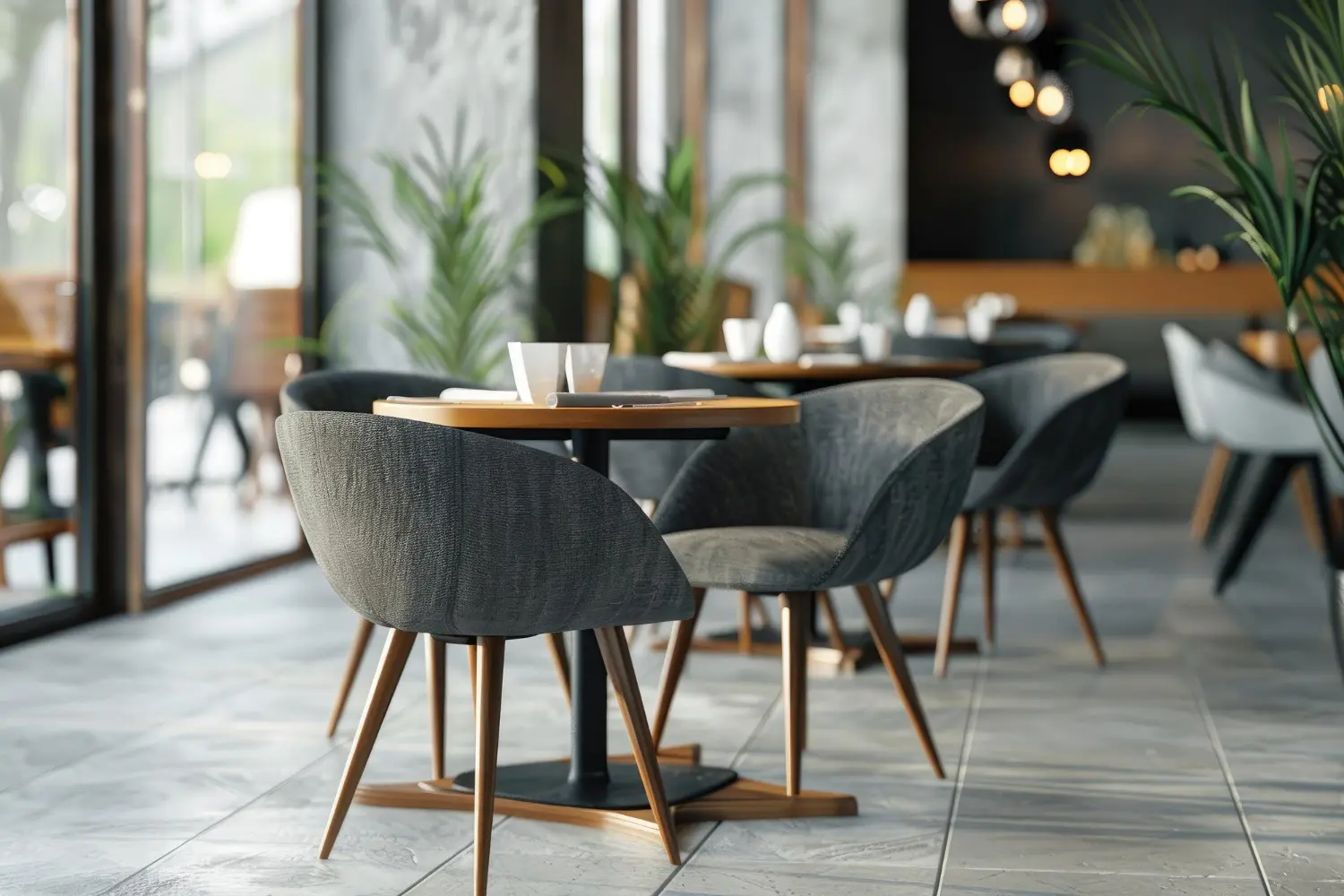
Getting restaurant chairs and tables to work together is not a decorating job. It is a specification job. Four things decide whether a room reads as designed or as assembled: height, proportion, material and colour. Get those right and mismatched styles still look deliberate. Get them wrong and a matched set still looks wrong.
This guide covers how we specify restaurant chairs and tables as a pair in our own factory. It also shows how to brief a supplier so the pieces still match when they arrive.
Match restaurant chairs and tables in this order: height first, then proportion, then material, then colour. Keep roughly 30 cm between seat and tabletop. Allow 60 cm of table edge per cover. Then either match finishes exactly from one production run, or contrast them deliberately by two clear steps.
Contents
- The Four Things That Have to Match
- Proportion: Chair Against Table
- Matching Materials Without Flattening the Room
- Getting Colour and Stain to Match in Production
- When Not to Match
- Matching to the Room
- Matching by Venue Type
- Building a Cohesive Look Step by Step
- Common Matching Mistakes
- How to Specify a Matched Set
- FAQ
The Four Things That Have to Match
Designers talk about matching in terms of style. Operators feel it in terms of comfort and wear. Both come down to the same four variables, and pairing restaurant chairs and tables well means settling them in that order.
1. Height Comes First
Height is the only one of the four that guests notice physically. Restaurant chairs and tables should leave about 30 cm between the seat and the underside of the top. Less than that traps thighs, while more than that lifts elbows into an awkward position.
Because this decides comfort rather than looks, settle it before anything else. Our guide to dining table and chair height sets out the standard numbers, the counter and bar variants, and the apron and knee clearances that override them.
2. Proportion Comes Second
Proportion is what people mean when they say a chair looks too heavy for a table. It covers seat width, back height, arm bulk and leg thickness, measured against the table beside it. A slim bistro table cannot carry a wide upholstered armchair, however well the colours agree.
3. Material Comes Third
Material sets the character of the room and the maintenance regime. Wood reads warm, metal reads sharp, and stone reads formal. Since a chair frame and a tabletop are usually made from different materials anyway, the aim is a deliberate relationship rather than an identical one.
4. Colour Comes Last
Colour is the easiest thing to change and the hardest thing to reproduce. Two suppliers can both call a finish walnut and deliver two different browns. Therefore colour belongs at the end of the process, once the physical decisions are locked.
| Variable | What to check | Working figure | Who decides |
|---|---|---|---|
| Height | Seat to underside of top | 30 cm | Comfort |
| Proportion | Table edge per cover | 60 cm | Capacity |
| Proportion | Chair depth when pushed in | Under the apron | Circulation |
| Material | Frame against top | Contrast or echo | Design |
| Colour | Stain and powder coat | One batch | Production |
Proportion: Chair Against Table
Proportion is where most schemes come apart, because it is the one variable nobody writes on a drawing. Three measurements decide whether restaurant chairs and tables sit together properly.
Seat Width Against Table Edge
Allow roughly 60 cm of table edge per cover. A 120 cm table therefore seats two on each long side comfortably. If your chairs are 52 cm wide, they fit. If they are 58 cm wide with arms, they touch, and guests feel it before they can explain it.
So measure the chair at its widest point, not at the seat. Arms, splayed back posts and shaped rails all add centimetres. Our comparison of restaurant chair types shows how much these formats differ.
Back Height Against the Room
Back height changes the room more than any other chair dimension. Low backs keep sightlines open and make a small room feel larger. High backs create privacy and absorb noise, although they also block the view across a floor.
Match back height to table size rather than to fashion. A tall back over a small two-top looks top-heavy. Meanwhile a low back around a large round table can leave the setting looking unfinished.
Legs, Bases and Knee Space
The last proportion check happens under the table. A four-leg table with a chair at each corner fights itself, so column or cross bases usually serve restaurant chairs and tables better. Check the apron depth too, because a deep apron blocks the seat from sliding under.
Finally, push a sample chair fully in. If the seat stops 10 cm proud of the table edge, your aisle just lost 10 cm, and our guide to restaurant table spacing explains what that costs across a full room.
Choosing chairs from a photograph
Catalogue photographs are shot with tables chosen to flatter the chair. The same chair against your 70 cm bistro table can look like a throne. We ask for the table drawing before we recommend a chair, and when a project is undecided we quote a sample of both. A pair of samples costs less than a room of furniture that never looks right.
One sample pair → the whole scheme confirmedMatching Materials Without Flattening the Room
Identical materials rarely produce the best room. Restaurant chairs and tables built entirely from one timber in one finish read flat, and the room shows wear faster because nothing breaks up the surface. Contrast, used carefully, does more work. Shape is the other lever: our guide to restaurant table shapes covers how round, square and rectangular tops change the same room.
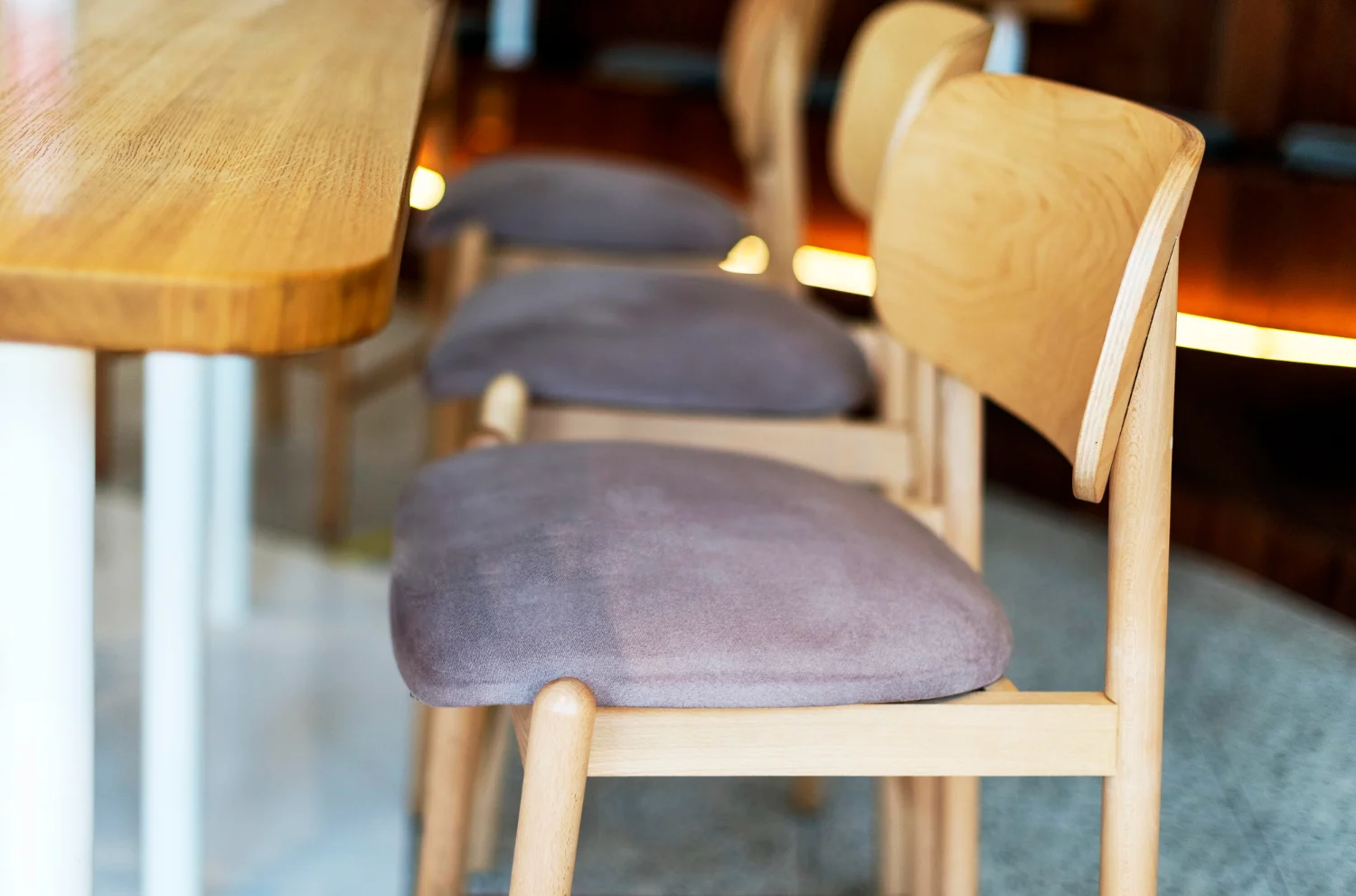
Wood Chairs With Wood Tops
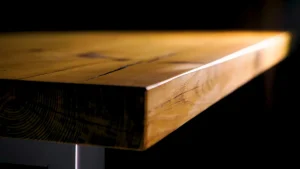
This is the classic pairing and the hardest to execute. Two pieces of timber either match exactly or clash, because the eye reads small differences in grain and tone as a mistake. So either specify both from the same species and the same stain batch, or separate them clearly by two steps of tone.
A light oak chair against a dark walnut top works. A light oak chair against a slightly warmer light oak top does not. Stone tops behave differently again, and our guide to marble table top care explains what living with one involves. Our wooden restaurant chairs and solid wood table tops come from the same finishing line, which removes the guesswork on the first option.
Metal Frames With Wood or Stone
Metal is the easiest frame to match, because it reads as a neutral. A black powder-coated frame sits under almost any top without argument. Brass and copper tones need more care, since they compete with warm timber.
For heavy-turnover rooms, metal restaurant chairs with an HPL or compact laminate top give the longest service life of any combination we build. The frame takes the knocks and the top takes the heat.
Upholstery Against Tabletops
Fabric is the third material in the room, and it is the one guests actually touch. A plain weave calms a busy stone top, while a patterned fabric fights it. So decide which surface leads before you choose the other.
Colour behaves differently in fabric too. Textiles read warmer under restaurant lighting than the same colour in a lacquer, because the pile absorbs light rather than reflecting it. Therefore hold the fabric swatch against the actual top under the actual lamps, not under daylight in an office.
Durability matters here as well. A light fabric against a dark timber top looks sharp on opening night, although it shows every mark by month three. Our guide to dining chair materials covers how frames and coverings wear against each other.
Stone and Laminate Tops
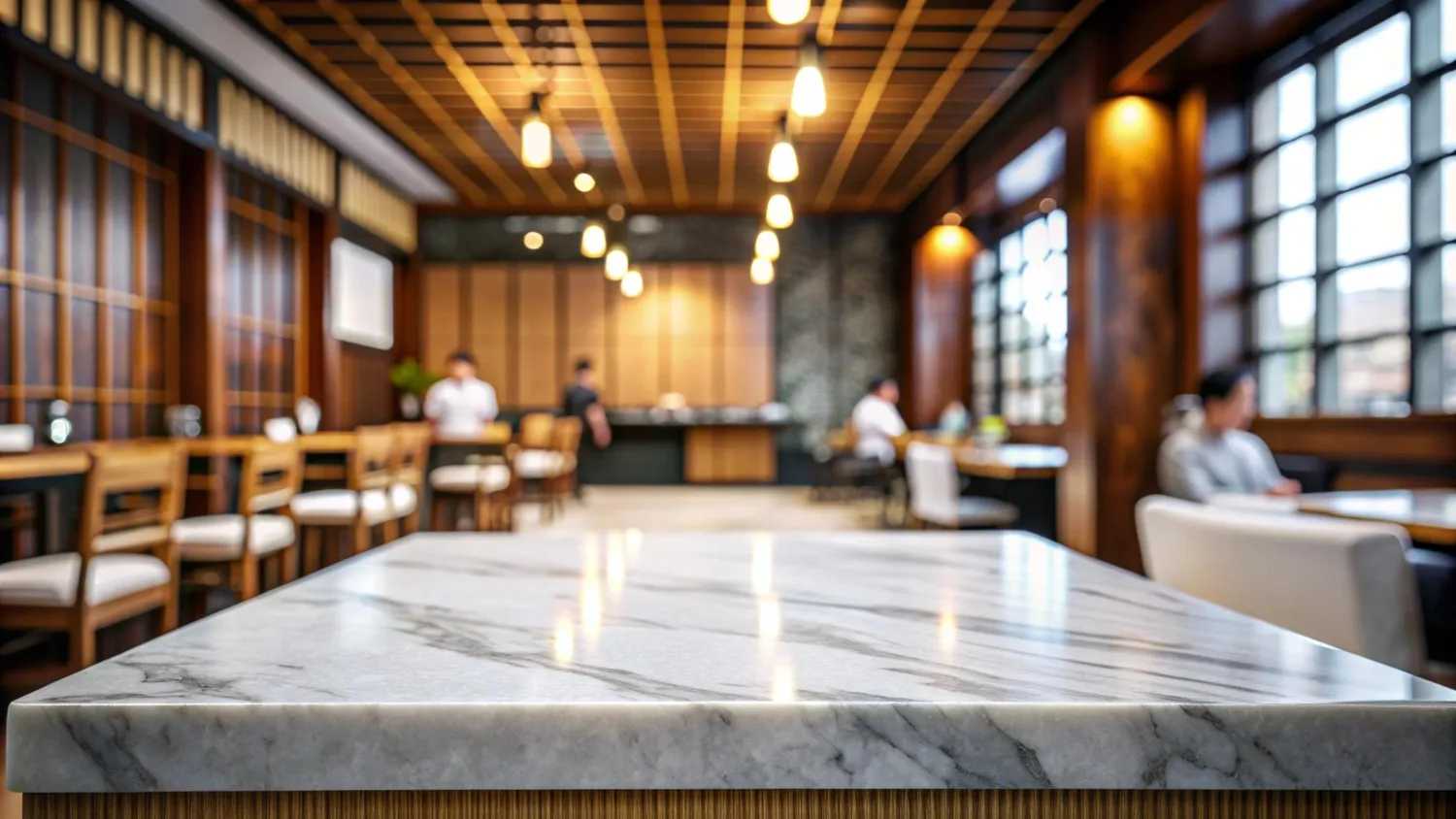
Marble and stone carry visual weight, so they need a chair with enough presence to answer them. A thin bentwood chair under a heavy marble table top looks under-scaled. An upholstered chair or a solid timber frame balances it better.
Laminate behaves differently. Because HPL compact laminate tops can print any pattern, they can imitate timber or stone at a fraction of the weight. That freedom is useful, although it tempts schemes into imitating a material the chairs then contradict. Our guide to restaurant table tops compares all these surfaces in detail.
Getting Colour and Stain to Match in Production
This is the part of matching restaurant chairs and tables that goes wrong after the order is placed, not before.
Why Two Walnut Finishes Never Match
Stain is a dye applied to timber, and timber varies. The same stain on beech, on oak and on ash produces three different results. Add a different lacquer sheen and the gap widens further.
So when a chair comes from one factory and a table from another, the finishes will differ. They almost always do. The only reliable way to match them is to produce both in the same workshop, from the same batch of stain, in the same week.
Sample Panels and Finish References
Ask for a physical sample panel before production starts. A photograph cannot carry a finish, and neither can a colour code. We produce panels in the actual timber and the actual stain. That panel then governs the finish on every one of your restaurant chairs and tables.
Keep one spare panel yourself. Three years later, when you order twenty more chairs, that panel is what makes the new pieces match the old ones. Because we also keep the specification on file, a reorder starts from a known reference rather than a guess.
Restaurant chairs and tables finished together
Chairs, tops and bases produced in one workshop, from one stain batch, so the finishes actually match on delivery.
When Not to Match
Matching everything is a choice, not a rule. Plenty of good rooms mix restaurant chairs and tables on purpose, and mixing solves problems that matching cannot.
The Two-Thirds Rule
A mixed scheme works when one seating type clearly dominates. Keep roughly two-thirds of the room in a single chair, then use the remaining third for a second design. The dominant chair holds the room together, while the second one relieves it.
Below that ratio the room reads as accidental. Above it the variation disappears. Therefore two chair models is usually the practical limit for a single dining floor.
Zoning a Room With Seating
Mixed seating is also how you divide a room without building walls. Booths along one wall, loose chairs in the centre and armchairs in a corner create three zones that guests read instantly. Our comparison of booth and banquette seating covers where fixed seating earns its cost.
One thing must stay constant across the zones, though. Usually that is the finish: different chair shapes in one stain still read as a set. Alternatively hold the material constant and vary the shape.
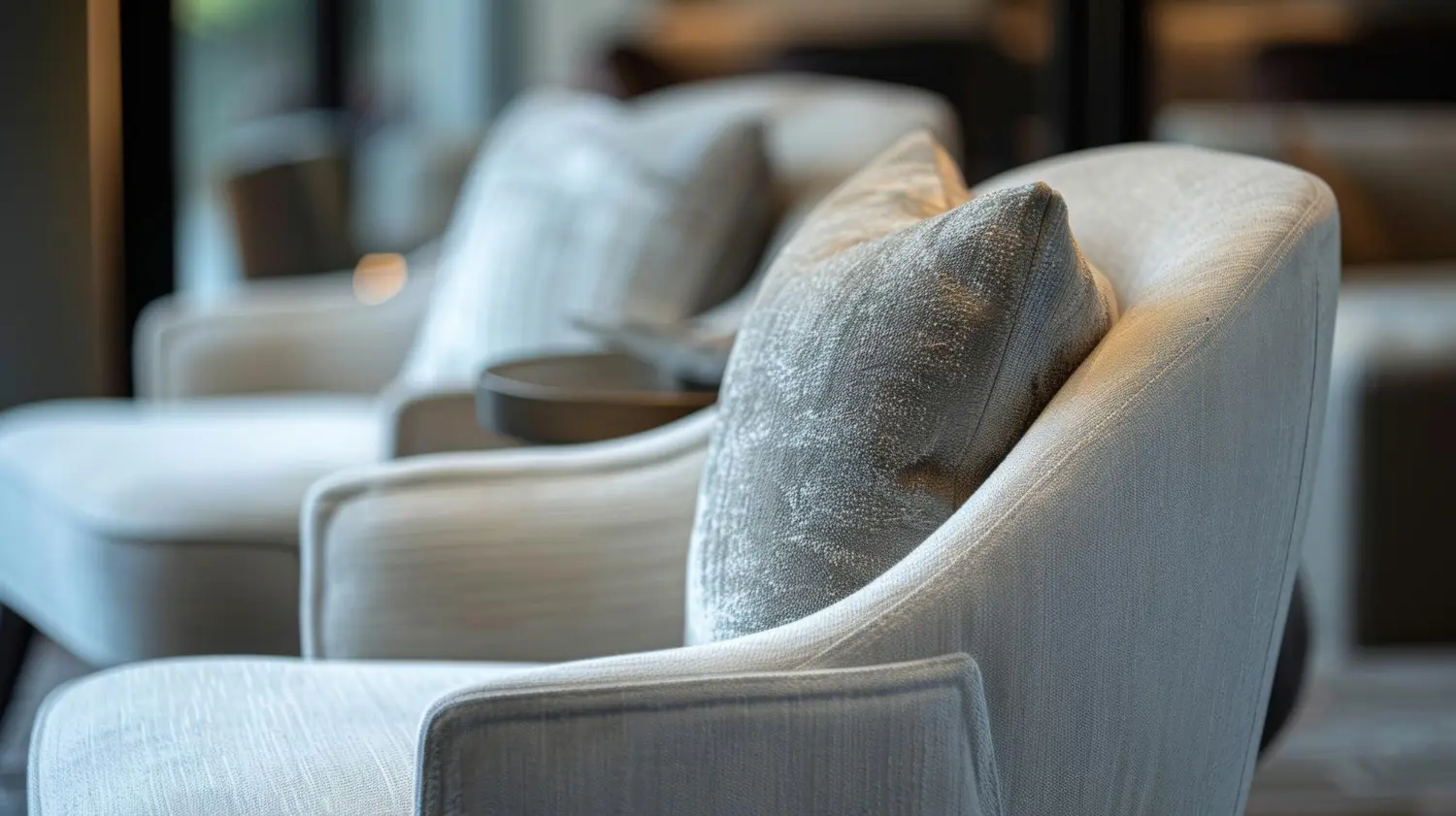
Matching to the Room, Not Only to Each Other
A pair can match perfectly and still look wrong, because the room is the third element in every scheme.
Floor and Wall Tones
The floor is the largest surface a guest sees, so it sets the base tone. Restaurant chairs and tables that sit close to the floor colour tend to disappear into it. A clear step of contrast keeps the furniture legible and makes the room feel deeper.
Walls work in the opposite direction. Dark walls push furniture forward, so lighter finishes gain presence against them. Meanwhile pale walls let heavier timbers anchor a room without crowding it.
Light Changes Every Finish
Every finish shifts under artificial light. Warm lamps at 2700 K push timber towards orange, while cooler light at 4000 K flattens it towards grey. A stain approved under office lighting can look like a different colour on the floor.
So approve samples in the venue if the building exists, and under the specified lamps if it does not. This single habit prevents more finish disputes than any specification document we have written.
Matching by Venue Type
How far to push the matching depends on the room and how long guests stay in it.
Cafes and Bistros
Turnover is fast and footprints are small, so proportion matters more than anything. Choose a compact chair without arms, a small top and a column base. Lightweight metal frames also let staff move furniture through the day.
Full-Service Restaurants
Guests sit longer, so comfort moves up the list. Upholstered seats, wider chairs and a table with real legroom are worth the floor area they take. Here the finish match carries most of the design load, because the shapes are usually calm.
Hotels and Multi-Space Projects
Hotels are the hardest case, since restaurant chairs and tables have to relate to a lobby, a bar and often a terrace as well. One finish reference across every space is the practical answer. Then vary the shape by room: a dining chair inside, an outdoor chair on the terrace and a bar stool at the counter, all in the same tone.
Building a Cohesive Look Step by Step
Here is the sequence we follow when a project asks us to specify restaurant chairs and tables for a whole room.
Step one: fix the table plan. Draw the tables first, with sizes and shapes set by covers and by the room. Tables are harder to change later, because they carry the capacity.
Step two: set the heights. Confirm the tabletop height and work back to the seat height. Check the apron and any cross rails at this stage.
Step three: choose the chair by proportion. Measure the chair against the table edge you have drawn. Push it under. If it does not slide fully in, look for another model before you fall in love with the fabric.
Step four: settle materials. Decide which surface leads the room. Then choose whether the other pieces echo it or contrast with it, and record that decision in writing.
Step five: approve one finish reference. Sign off a physical panel and apply it to chairs, tops and bases together. This single step prevents most of the problems in this article.
Common Matching Mistakes
Five errors account for nearly every set of restaurant chairs and tables we are asked to rescue. A sixth, arguably, is choosing finishes without checking how they will be cleaned, which our guide to cleaning restaurant chairs covers in detail.
First, ordering chairs and tables from different suppliers and expecting the stains to agree. Second, choosing the chair first because it is the emotional decision, then forcing a table around it.
Third, ignoring arm height against the apron, which stops chairs sliding in. Fourth, matching a mid-tone chair to a mid-tone top so closely that the near-miss becomes the only thing anyone sees.
Fifth, and most expensive, buying with no reference panel. Two years later the reorder arrives in a visibly different brown, and the room needs replacing rather than extending.
One supplier costs less than two matched suppliers
Buying chairs from one source and tables from another usually looks cheaper on the quotation. It rarely is. Two shipments, two sets of documents, two lead times and two finish standards add cost that never appears on either line. When the finishes then disagree, the fix is a repaint or a replacement, and both cost more than the original saving.
Two suppliers → two finish standardsHow to Specify a Matched Set
A useful enquiry contains five things: the table plan with sizes, the cover count, the chair model or a reference image, the finish direction and the delivery date. With those, we can quote restaurant chairs and tables as one matched package.
From there we confirm the proportions against your drawing, produce a finish panel for approval, and schedule chairs, tops and bases into the same production run. Everything then ships together, which is the point of ordering it together.
If you are still choosing a supplier, our buyer’s guide to choosing a factory explains how to tell a factory from a trader, and why that difference decides whether a reorder still matches in three years. When your quantities are ready, send us the details and we will come back with a project quotation.
FAQ
Do restaurant chairs and tables have to match exactly?
No. They have to relate. Height and proportion must be right, because those decide comfort. Material and colour can either match exactly or contrast deliberately, and a clear contrast usually reads better than a near miss.
How do I match dining chairs to a table?
Work in order: height, proportion, material, then colour. Allow about 30 cm between the seat and the underside of the top, and roughly 60 cm of table edge per cover. Then push a sample chair fully under the table before you commit.
Should chairs be lighter or darker than the table?
Either works, as long as the difference is obvious. Two clear steps of tone read as a decision. Half a step reads as a mistake, so avoid finishes that sit close without matching.
Can I mix different chairs in one restaurant?
Yes, and it often improves a room. Keep about two-thirds of the seating in one model, then use a second model for the rest. Hold one thing constant across both, usually the finish.
What is the gap between seat and table?
Around 30 cm suits most adults. Check the apron depth as well, because a deep apron reduces the usable gap even when the tabletop height is correct.
Why do my chairs and tables look different in colour?
Because stain behaves differently on different timbers, and because separate factories use separate batches. The reliable fix is to produce chairs, tops and bases in one workshop from one approved sample panel.
How much table edge does each guest need?
Allow about 60 cm per cover. Measure your chairs at their widest point, since arms and splayed back posts add width that the seat dimension does not show.
Should I choose the chair or the table first?
Draw the tables first. Tables set the capacity of the room, so they are far harder to change later. Choose the chair against a table plan you have already fixed.
More in this category