
Knowing how to clean restaurant chairs is the cheapest maintenance decision you will ever make. A chair that gets wiped correctly every night lasts years longer than an identical chair that gets scrubbed once a month. The method changes with the frame and with the covering, and using the wrong one causes more damage than the dirt does.
This guide covers the daily routine, the method for each frame material, upholstery by covering type, the stains a dining room actually produces, and the products that quietly destroy furniture.
Clean restaurant chairs nightly with a damp cloth and a neutral pH detergent, then dry them immediately. Match the method to the material: mild soap on timber, non-abrasive cloth on powder coat, and the fabric cleaning code on upholstery. Never leave water standing on a joint, and never use bleach or solvent on a frame.
Contents
- The Daily Routine That Prevents Most Damage
- Cleaning Chair Frames by Material
- Cleaning Upholstery by Covering
- Removing the Stains a Dining Room Produces
- Products That Help and Products That Destroy
- Cleaning Outdoor Restaurant Chairs
- Booths, Banquettes and Bar Stools
- Cleaning Records and Inspections
- A Schedule Your Staff Will Actually Follow
- Mistakes That Shorten Chair Life
- When Cleaning Is No Longer the Answer
- FAQ
The Daily Routine That Prevents Most Damage
Almost every ruined chair we are asked to replace was ruined slowly. Grease built up, a spill dried into a seam, and the deep clean that followed had to be aggressive enough to strip the finish. A short nightly routine removes that whole problem.
Between Covers
Wipe the seat and the top rail as you reset the table. A dry or barely damp cloth is enough at this point, because you are removing crumbs rather than grease. Staff can do this in the same movement that squares the chair to the table.
Pay attention to the top rail specifically. Guests grip it with their hands, so it collects more oil than the seat does. On a light timber frame that oil darkens the wood within weeks.
End of Service
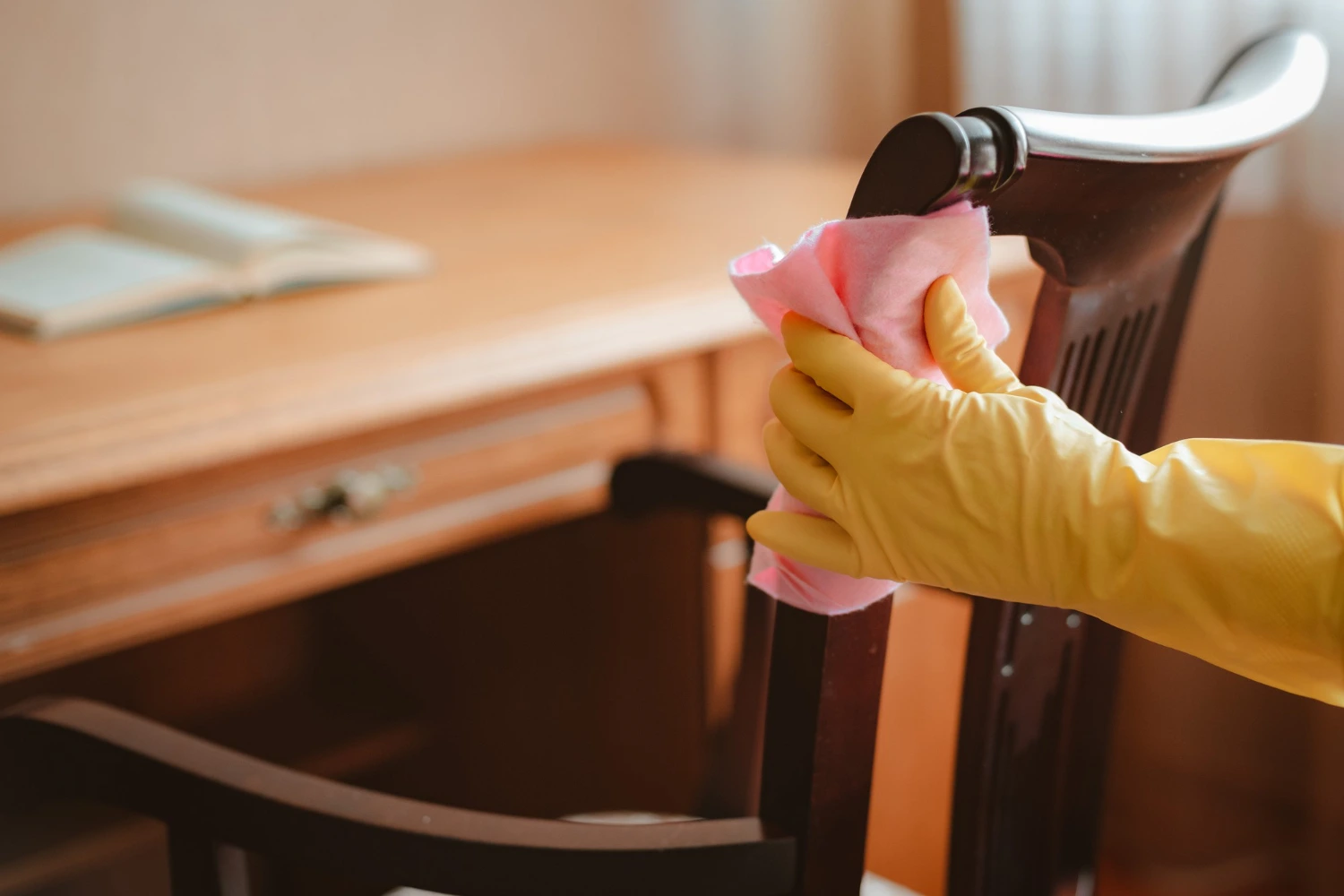
The nightly pass is where you actually clean restaurant chairs properly. Use warm water with a neutral pH detergent, wring the cloth until it is damp rather than wet, and work from the top of the frame down.
Then dry immediately with a second cloth. Water that sits in a joint or under a seat pad is the single most common cause of loose frames, because timber swells and glue lines soften. Therefore drying matters as much as washing.
The Weekly Deep Clean
Once a week, turn chairs over and clean what nobody sees. Check the underside of the seat, the stretcher rails and the feet. This is also when you spot loose screws, worn glides and split seams, which is worth more than the cleaning itself.
| Frequency | What to do | Tools | Time per chair |
|---|---|---|---|
| Between covers | Seat and top rail | Dry cloth | 5 sec |
| End of service | Full frame, damp then dry | 2 cloths, neutral detergent | 30 sec |
| Weekly | Underside, rails, feet, fixings | Cloth, brush, screwdriver | 2 min |
| Quarterly | Upholstery deep clean | Code-matched cleaner | 10 min |
| Annually | Refinish or touch up timber | Specialist | As needed |
Cleaning Chair Frames by Material
How you clean restaurant chairs starts with the frame, because the frame decides what the surface tolerates. Our comparison of dining chair materials covers how each one performs; this section covers how to keep each one alive. Our overview of the types of restaurant chairs sets out which frames turn up in which rooms.
Wooden Frames
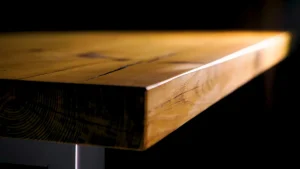
Timber wants as little water as possible. Use a damp cloth with neutral detergent, follow the grain, and dry straight away. Avoid soaking the joints, because most chair failures start there rather than on the surface.
Lacquered frames tolerate this routine indefinitely. Oiled frames need re-oiling once or twice a year, since cleaning gradually removes the oil along with the dirt. Our wooden restaurant chairs ship lacquered by default for exactly this reason.
Never use bleach, ammonia or a scouring pad on timber. Bleach lifts the stain colour unevenly, and once that happens the only fix is sanding the whole frame back.
Powder-Coated Steel
Powder coat is tough but it is still a coating. Warm soapy water and a soft cloth handle everything a dining room produces. Abrasive pads leave micro-scratches that dull the finish and eventually let moisture reach the steel.
Check the welds and the feet during the weekly pass. Powder coat fails at edges first, and a chip the size of a grain of rice will spread into a rust bloom over a season. Touching it up early takes a minute.
Aluminium and Chrome
Aluminium does not rust, so it forgives more. Even so, alkaline cleaners can stain it, and oven degreasers will pit the surface. Stick to neutral detergent here as well.
Chrome shows fingerprints and water spots more than any other finish. Dry it with a microfibre cloth immediately after wiping, and it stays bright. Chrome polish is rarely needed if the drying step happens every night.
Cane, Rattan and Woven Seats
Woven seats need the gentlest routine of all. Vacuum along the weave with a brush head, then wipe with a barely damp cloth and let the seat air dry completely.
Water is the enemy here. Natural cane swells when wet and slackens as it dries, so a soaked seat sags permanently. Synthetic weave tolerates more, although trapped moisture still breeds mildew underneath.
Never scrub a woven seat. Broken strands unravel outwards from the damage, and a repair costs more than the seat is worth. Treat spills by blotting from above rather than pushing liquid through the weave.
Polypropylene and Moulded Plastic
Moulded seats are the easiest to maintain, which is part of why fast-service venues choose them. Warm water and detergent handle daily dirt, and most marks come off with a melamine sponge used lightly.
Two cautions apply. Solvents can cloud the surface permanently, and dark polypropylene fades under direct sun. So keep chemicals mild and rotate outdoor stock through the season.
Cleaning Upholstery by Covering
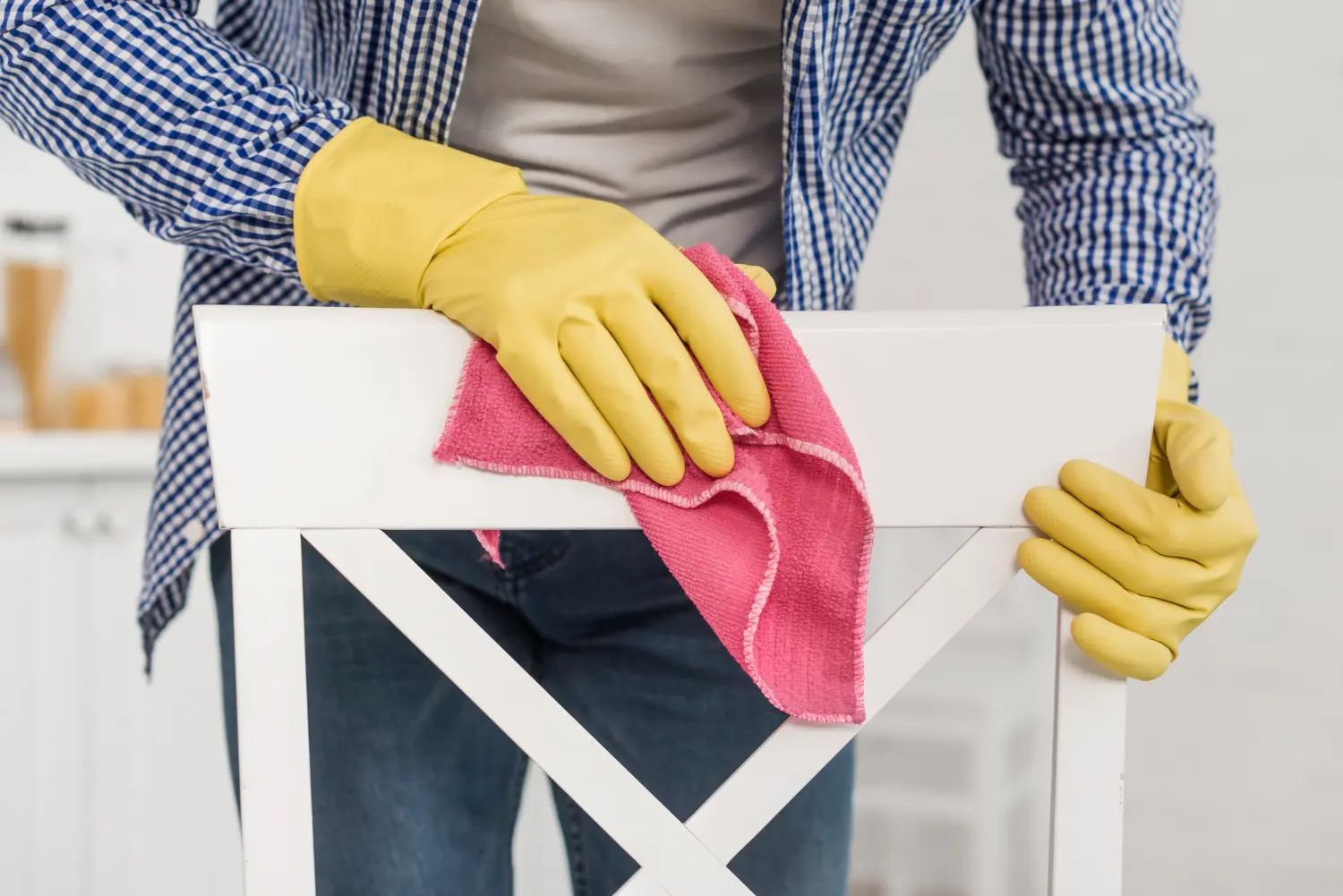
Upholstery is where most damage happens, because the covering hides the mistake until it is permanent. So when you clean restaurant chairs with fabric or vinyl seats, always start with the cleaning code rather than with the cleaner.
Reading the Cleaning Code First
Contract fabrics carry a code that tells you which solvent the fibre tolerates. W means water-based cleaners. S means solvent only. WS accepts either, and X means vacuum only, with no liquid at all.
Using a water-based cleaner on an S-coded fabric leaves a ring that no amount of further cleaning removes. So ask your supplier for the code at the time of ordering, and record it somewhere your cleaning staff can find it.
Contract Fabric
Vacuum first, always. Grit left in the weave acts like sandpaper under every guest who sits down, and it does more damage over a year than any spill.
For the quarterly clean, use a low-moisture upholstery cleaner and work in small sections. Blot rather than rub, because rubbing spreads the stain and distorts the weave. Then let the seat dry fully before the venue opens.
Vinyl and Faux Leather
Vinyl is the workhorse of restaurant seating and the most commonly ruined. It cleans with warm soapy water and nothing stronger. Alcohol wipes, antibacterial sprays and solvent cleaners strip the plasticiser, and the surface then cracks along the seat front within months.
Dry it after every wash. Standing moisture works into the stitch holes and lifts the backing away from the foam.
Real Leather
Leather needs the least water and the most attention. Dust weekly, wipe with a barely damp cloth, and condition every six months with a product made for upholstery leather rather than for shoes.
Keep leather away from radiators and direct sun. Heat dries the hide, and a dried hide cracks at the fold lines where guests sit. Because that damage cannot be reversed, prevention is the whole strategy.
The antibacterial spray problem
Many venues now wipe seating with alcohol-based sanitiser between covers. On vinyl and faux leather this is slow destruction: the alcohol pulls the plasticiser out of the surface, and the covering goes hard, then cracks along the front edge of the seat. We see three-year-old chairs with five-year wear for this reason alone. If sanitising is part of your service standard, specify a covering rated for it before you order, and tell your supplier that is the requirement.
Alcohol on vinyl → cracked seat fronts in one seasonRemoving the Stains a Dining Room Produces
Dining room stains are a short list, and each one has a method that works. Speed matters more than product in every case, so treat spills before you clean restaurant chairs properly at close.
Red wine. Blot immediately, never rub. On W or WS fabric, use cold water and a drop of neutral detergent. On vinyl, warm soapy water lifts it if you get there the same evening.
Oil and grease. Absorb first with a dry cloth, then treat with a solvent cleaner if the code allows. Water alone spreads oil rather than removing it.
Coffee and tea. Cold water and blotting handle fresh spills. Dried tannin stains need a code-matched upholstery cleaner and patience.
Chewing gum. Harden it with ice in a bag, then lift the piece off with a blunt edge. Solvents are almost never necessary and often damage the covering.
Ink and pen. Test any treatment on a hidden area first. Ink is the one stain where an early professional clean is usually cheaper than a failed attempt.
Products That Help and Products That Destroy
The shortest way to clean restaurant chairs safely is to standardise on two products and ban the rest.
What to Keep in the Cupboard
You can clean restaurant chairs of every type with two products. A neutral pH detergent covers frames, moulded seats and vinyl. A code-matched upholstery cleaner covers fabric. Add microfibre cloths, a soft brush for carved detail and a vacuum with an upholstery head, and the list is complete.
Label the bottles and keep them separate from kitchen chemicals. Most chemical damage we see came from a strong kitchen degreaser used on furniture because it was the bottle nearest the door.
What to Ban
Bleach, ammonia, oven cleaner, acetone, alcohol wipes and abrasive pads should never touch dining furniture. Each one attacks a finish that is designed for a milder regime.
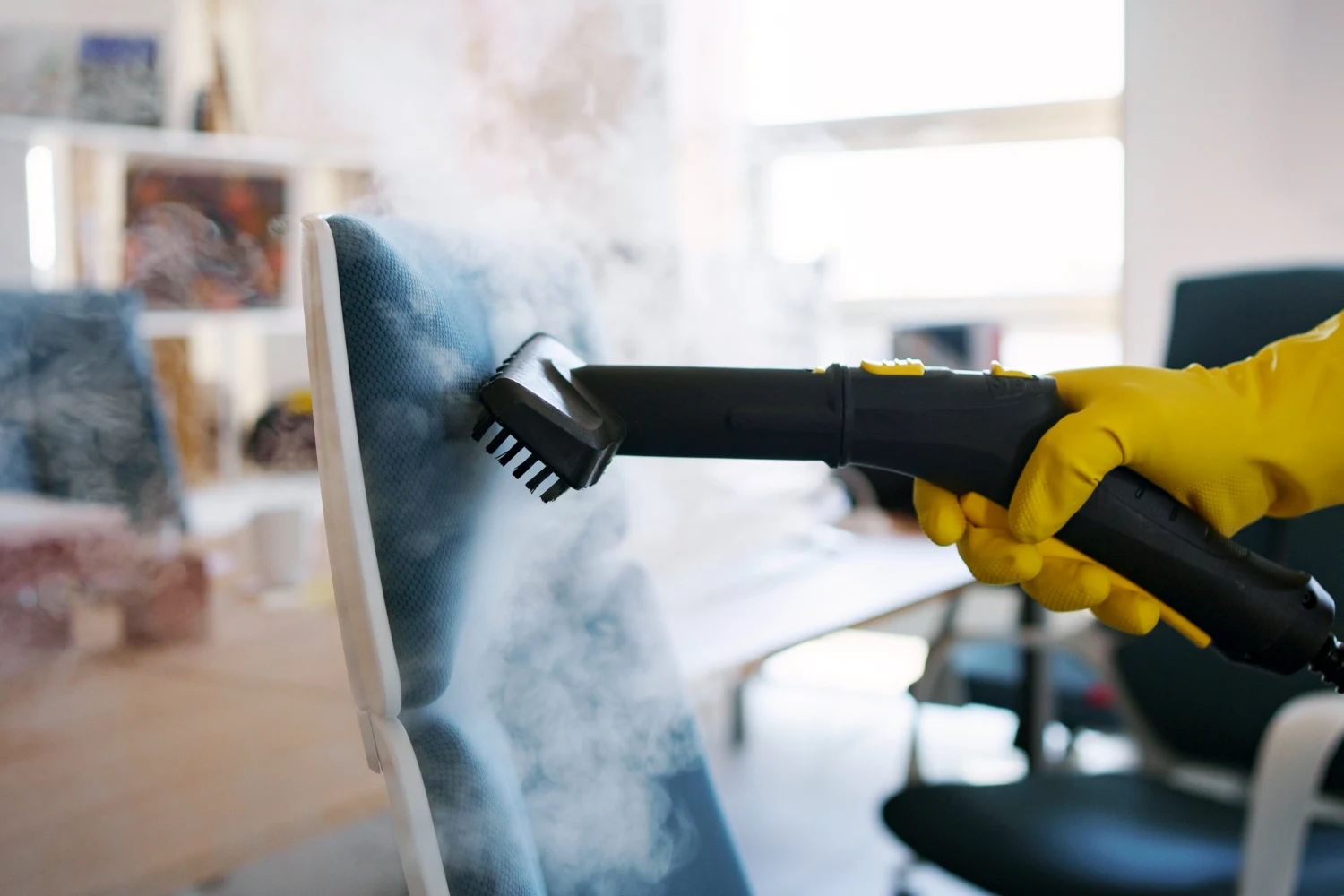
Steam cleaners deserve a separate warning. Steam forces moisture into joints and under seat pads, and it softens the adhesive in laminated components. Pressure washers do the same job faster on outdoor stock, so keep both away from your seating.
Cleaning Outdoor Restaurant Chairs
Cleaning restaurant chairs outdoors means fighting a different enemy. Instead of grease, terrace furniture collects pollen, dust, rain marks and, near the coast, salt.
Rinse outdoor stock weekly during the season and dry it where possible. Salt in particular needs rinsing rather than wiping, since wiping grinds crystals into the coating. Our outdoor restaurant chairs use frames chosen for this cycle, although no finish survives being left wet under a stack all winter.
At the end of the season, clean everything before storage rather than after. Dirt left on a frame for five months is far harder to remove, and moisture trapped inside a stack causes most winter damage.
Seating built for a commercial cleaning regime
Lacquered timber, powder-coated steel and contract coverings, made to order in our own factory in Turkey.
Cleaning Booths, Banquettes and Bar Stools
Cleaning restaurant chairs that are fixed to the floor or too heavy to lift needs the same products but a different order of work.
Booths and Banquettes
Start with the crevice tool. The gap between the seat and the back collects more debris than any other point in a dining room, and it is the reason a booth smells before it looks dirty.
Then wipe the seat, the back and the outer panel, working downwards. Pay attention to the front edge of the seat, where guests slide in and out; that edge wears first on every covering. Our comparison of booth and banquette seating explains why fixed seating traps soil that loose chairs never hold, and our booth and banquette range is built with removable seat pads for this reason.
Bar Stools
Stools collect drink spills rather than food. Check the footrest first, since that ring takes shoe polish, salt and grit, and it is the part guests photograph without meaning to.
Swivel mechanisms and gas lifts need dry cleaning only. Water finds its way into the bearing and the squeak that follows never really goes away. Wipe bar stools around the mechanism, never into it.
Cleaning Records and Food Safety Inspections
Inspectors rarely ask how you clean restaurant chairs. They ask about the surfaces guests touch, and seating is the largest of those surfaces in any dining room.
Keep the seating routine on the same cleaning schedule sheet as the rest of front of house. A dated record showing the nightly frame wipe and the quarterly upholstery clean answers the question before it is asked.
Choose coverings with this in mind as well. Sealed vinyl and tightly woven contract fabrics wipe down properly, while open weaves and decorative detailing trap soil that no routine removes. The same logic applies to your waiter stations, where clean and used items share one unit.
A Schedule Your Staff Will Actually Follow
A plan to clean restaurant chairs fails when it asks for judgement at eleven at night. Remove the judgement and it survives.
Write the routine as three lines, not three pages: what happens between covers, what happens at close, and what happens on the weekly shift. Put the frequency next to each line and nothing else.
Assign the weekly deep clean to a named shift rather than to everyone. Tasks owned by everyone are owned by nobody, and the weekly pass is the one that catches loose fixings early.
Finally, keep the fabric codes and the approved product list on the same sheet. Staff who can see that vinyl takes soapy water and nothing else will not reach for the sanitiser bottle.
Mistakes That Shorten Chair Life
Five habits account for most premature replacement, and each one comes from cleaning restaurant chairs in a hurry.
First, cleaning with too much water and no drying step. Second, using kitchen degreaser on dining furniture because it removes grease faster.
Third, skipping the vacuum before an upholstery clean, which grinds grit deeper into the weave. Fourth, ignoring the cleaning code and treating every fabric as water-safe.
Fifth, stacking chairs while they are still damp. Trapped moisture marks finishes, encourages mould in foam and loosens joints, and it happens most often at the end of a long shift.
Thirty seconds a night against a five-year replacement
A nightly wipe-and-dry takes about thirty seconds per chair. Across a hundred-seat room that is under an hour, spread over the close-down shift. The alternative is a seating replacement two or three years earlier than necessary, which is the largest single furniture cost most venues face. No other maintenance task returns as much for as little.
30 sec per chair → years of extra service lifeWhen Cleaning Is No Longer the Answer
Cleaning restaurant chairs solves dirt. It does not solve wear, and telling the two apart saves money. Our guide to restaurant chair lifespan sets out what wear looks like at each stage and when it becomes terminal.
Once a fabric has lost its nap, once vinyl has cracked at the seat front, or once a timber frame has darkened unevenly under a worn lacquer, no cleaner will restore it. At that point the choice is recovering the seat, refinishing the frame or replacing the chair.
Recovering usually costs a fraction of replacement, and it works whenever the frame is still tight. We supply the original fabric reference and the seat pattern for our own models, which makes local recovering straightforward. Our guide to restaurant chair fabric explains how to choose the replacement covering.
Replacement makes sense when frames have loosened across a whole batch. If you reach that point, our buyer’s guide to sourcing furniture explains what to check before you reorder, and why buying from the factory keeps the replacements matching what you already own. When you know your quantities, send us the details for a project quotation.
FAQ
How do you clean restaurant chairs daily?
Wipe the seat and top rail between covers with a dry cloth. At the end of service, wash the whole frame with warm water and a neutral pH detergent, then dry it immediately with a second cloth.
What is the best cleaner for restaurant chairs?
A neutral pH detergent for frames, moulded seats and vinyl, plus an upholstery cleaner matched to the fabric code. Two products cover almost everything a dining room produces.
Can I use bleach or disinfectant wipes on restaurant chairs?
No. Bleach lifts stain colour from timber unevenly, and alcohol wipes strip the plasticiser from vinyl and faux leather, which then cracks. If sanitising is part of your standard, specify a covering rated for it when you order.
How do I clean upholstered restaurant chairs?
Check the cleaning code first: W for water-based, S for solvent, WS for either, X for vacuum only. Vacuum before you clean, work in small sections, blot rather than rub, and let the seat dry fully before service.
How often should restaurant chairs be deep cleaned?
Turn chairs over weekly to clean the underside, rails and feet, and deep clean upholstery quarterly. Venues with heavy turnover or light-coloured fabric usually move the upholstery clean to every two months.
Can I steam clean restaurant chairs?
Avoid it. Steam drives moisture into joints and under seat pads, and it softens adhesive in laminated parts. Low-moisture upholstery cleaning achieves the same result without the risk.
How do I remove red wine from a restaurant chair?
Blot immediately and never rub. On W or WS fabric, use cold water with a drop of neutral detergent. On vinyl, warm soapy water lifts it as long as you treat the spill the same evening.
How do I clean outdoor restaurant chairs?
Rinse rather than wipe, especially near the coast, because wiping grinds salt crystals into the coating. Dry the frames before stacking, and clean everything before winter storage rather than after it.
More in this category