
Choosing restaurant chair fabric usually starts with a colour and ends with a disappointment. The colour is the easy part. What decides whether a seat still looks right in year four is a small set of test results printed on the back of the sample card, and most of them are ignored.
This guide explains what Martindale actually measures, how vinyl and polyurethane differ, which other tests matter more than people expect, and how to read a fabric card properly before you commit a whole room to it.
We have written it from the production side. For the wider sourcing picture, see our guide to restaurant furniture manufacturers.
For restaurant chair fabric, ask for a Martindale rub count of at least 40,000 for general contract use and 50,000 or more for high-turnover venues. Then check four things the rub count does not cover: pilling grade, lightfastness, seam slippage and fire performance. Vinyl and polyurethane both imitate leather, and they age in completely different ways, so match the covering to how the room is cleaned rather than to how it looks on a card.
Contents
- What Martindale Actually Measures
- The Four Families of Restaurant Chair Fabric
- The Tests That Matter Beyond Martindale
- Reading a Fabric Card Properly
- Matching Restaurant Chair Fabric to the Venue
- Estimating Metreage and Ordering
- Foam, Backing and What Sits Underneath
- Colour and Texture in Service
- Mistakes That Shorten Fabric Life
- FAQ
What Martindale Actually Measures
Martindale is the number everybody quotes and few people interrogate. Understanding it takes two minutes and changes how you read every restaurant chair fabric card afterwards.
How the Test Works
A machine rubs a standard abrasive against the fabric in a figure-of-eight motion under a set load. Technicians count the cycles until two threads break, or until a noticeable change appears in the surface.
That cycle count becomes the Martindale rating. So the number describes resistance to abrasion in a laboratory, not durability in a dining room.
What the Numbers Mean
Below 20,000 cycles the fabric belongs in a domestic setting. Between 20,000 and 30,000 it suits light commercial use such as a hotel bedroom chair.
Forty thousand is the sensible floor for restaurant chair fabric in general trading. Above 50,000 you are into heavy contract territory, which is where fast casual and late-night venues should sit.
Very high figures sometimes indicate a coated fabric rather than a tougher weave. Therefore read the composition alongside the number rather than treating the cycle count as a score.
Wyzenbeek and Double Rubs
American fabric cards quote Wyzenbeek double rubs instead. The test drags an abrasive back and forth in a straight line, which is a different motion entirely.
No reliable conversion exists between the two scales, whatever conversion charts circulate. Consequently, compare Martindale against Martindale and double rubs against double rubs, and ask the mill which test applies.
Where the Number Misleads
Abrasion is only one failure mode. Seats also fail through pilling, seam slippage, fading and plasticiser loss, and a high rub count says nothing about any of them.
Chair shape matters too, and our overview of the types of restaurant chairs sets out which shapes appear where. A tight upholstered seat pad wears far more slowly than a loose-covered back that flexes every time a guest leans, even in identical restaurant chair fabric.
| Venue type | Martindale target | Typical covering | Watch for |
|---|---|---|---|
| Hotel bedroom chair | 25,000+ | Woven, light leather | Lightfastness |
| Fine dining | 40,000+ | Woven, leather | Pilling, stain release |
| Casual dining | 40,000–60,000 | Woven, polyurethane | Cleanability |
| Fast casual, family | 60,000+ | Vinyl, coated | Seam strength |
| Bars, late night | 60,000+ | Vinyl, heavy woven | Sanitiser damage |
| Banquet and function | 40,000+ | Woven with stain finish | Stacking abrasion |
| Healthcare-adjacent | 60,000+ | Coated, wipe-clean | Chemical resistance |
The Four Families of Restaurant Chair Fabric
Before choosing a covering at all, decide how much of the chair carries one: our guide to upholstered versus non-upholstered restaurant chairs covers that step. Almost every sample a mill sends you belongs to one of four families. Each one fails in a characteristic way, and knowing that pattern is more useful than memorising brand names.
Contract Woven Fabric
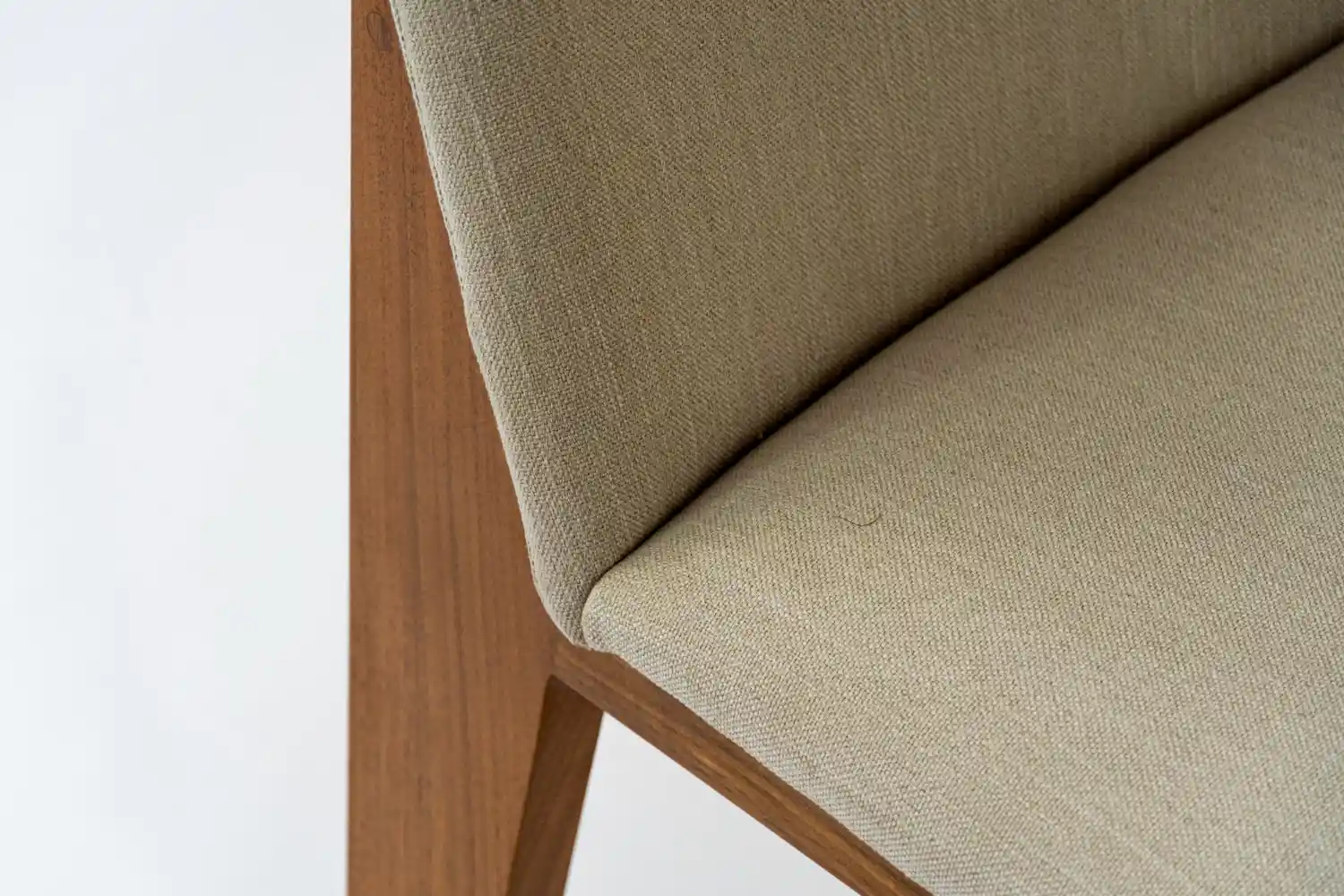
Woven contract cloth is usually a polyester blend, sometimes with wool, nylon or a stain-release finish. It breathes, it takes colour beautifully and it feels warm to sit on.
However, its weakness is liquid. A woven face absorbs before you can blot, so venues serving sauces and red wine either accept a stain-release finish or choose something coated.
Pilling is the second weakness. Short-staple blends bobble along the front edge of a seat, which looks tired long before the fabric is worn out.
Vinyl
Vinyl is a PVC face on a woven or knitted backing, and it is the workhorse of high-volume dining. Spills sit on the surface, so a wipe removes almost everything.
Meanwhile, it ages by losing plasticiser. As that happens the surface hardens and cracks, usually along the front edge of the seat where the material flexes most.
Alcohol-based sanitiser accelerates that process dramatically. Our notes on cleaning restaurant furniture cover which products do the damage.
Polyurethane Faux Leather
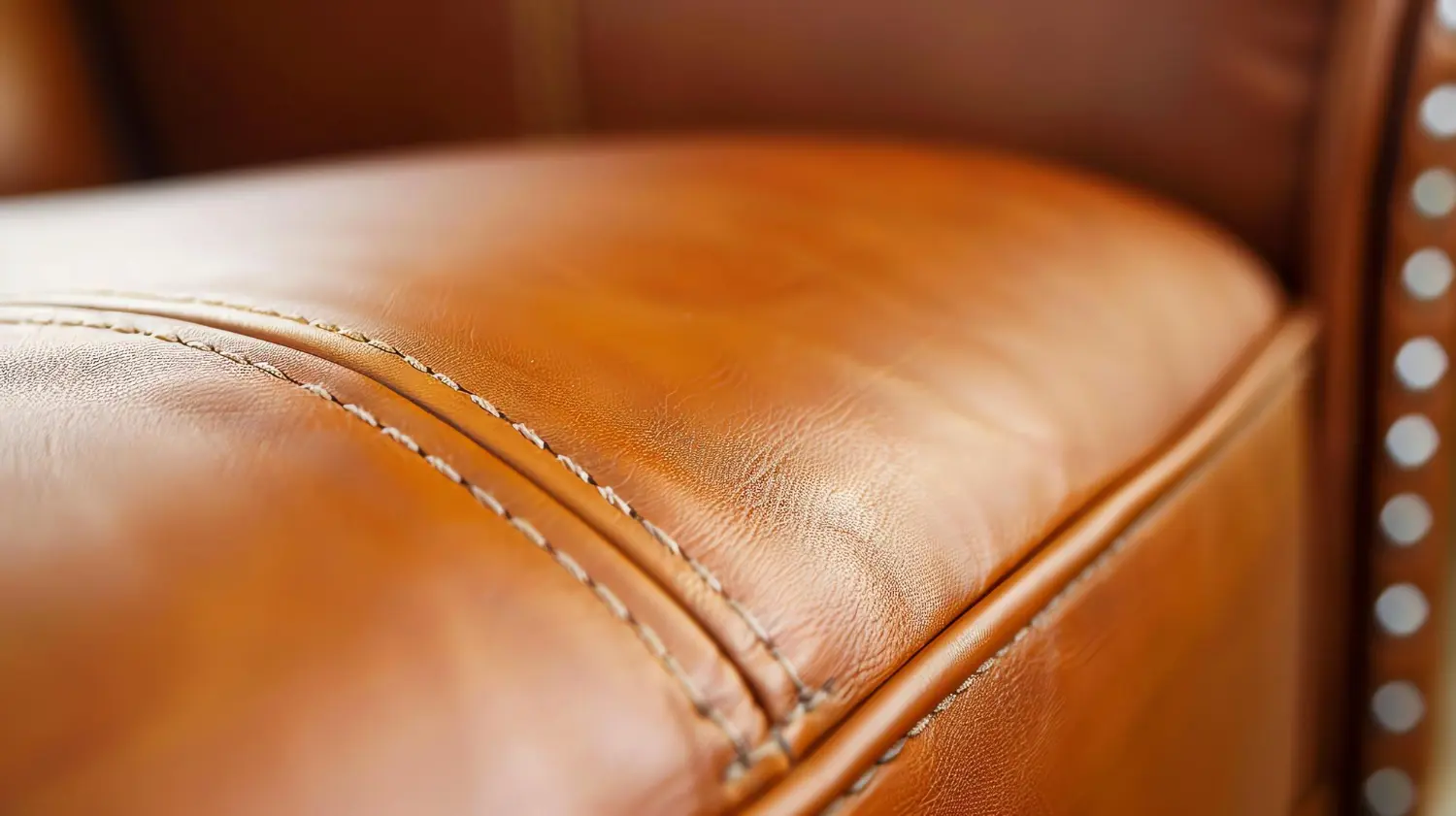
Polyurethane, usually sold as PU, is softer and more breathable than vinyl and looks far closer to real leather. Designers reach for it when a room needs the leather effect without the leather itself.
It fails differently: the coating delaminates and peels away from the backing rather than cracking. Heat, humidity and body oils all shorten that timeline.
Notably, quality varies enormously inside this family. Ask for the coating thickness and the hydrolysis rating, because those two figures separate a five-year PU from a two-year one.
Real Leather
Leather ages rather than degrades, which is why it still appears in rooms designed to last a decade. Corrected-grain and pigmented finishes handle contract use best.
Aniline and semi-aniline leathers look wonderful and mark quickly, so keep them for lounge seating rather than dining chairs. Our comparison of booth and banquette seating covers the fixed positions where a covering runs metres rather than per chair. Our range of restaurant armchairs and sofas covers the positions where those finishes make sense.
| Covering | Cleans | Comfort | Fails by | Best for |
|---|---|---|---|---|
| Contract woven | Moderate | High | Staining, pilling | Fine dining, hotels |
| Vinyl | Excellent | Moderate | Cracking at the edge | Fast casual, family |
| Polyurethane | Very good | Good | Peeling, delamination | Casual dining, bars |
| Corrected leather | Good | High | Scuffing, drying out | Long-life schemes |
| Aniline leather | Poor | Very high | Marking, patina | Lounge only |
| Outdoor acrylic | Very good | Moderate | Chalking in strong sun | Terraces |
The Tests That Matter Beyond Martindale
Four further results appear on most restaurant chair fabric cards, and each one predicts a failure that abrasion testing misses entirely.
Pilling and Snagging
Pilling grades run from one to five, where five means no change and one means severe bobbling. Anything below grade four looks worn on a seat front within a season.
Similarly, snagging matters where guests carry bags or wear jewellery. Bouclé and loose weaves catch easily, which is why they suit backs better than seats.
Lightfastness
Lightfastness runs on a blue-wool scale from one to eight. Five is the usual contract minimum, and anything facing a south window should be six or better.
Moreover, fading is uneven rather than uniform. One faded chair in a run of twelve is far more visible than twelve chairs that have aged together, so match the rating to the sunniest position rather than the average.
Seam Slippage and Tear Strength
Seam slippage measures whether threads pull apart at a stitched joint under load. A fabric with a fine, slippery yarn can pass abrasion testing and still open along a seam.
Equally, tear strength matters at the staple line where the maker pulls the fabric over the frame. Ask for both figures on any deep-buttoned or tightly upholstered chair.
Fire Performance
Requirements differ by market, so name your jurisdiction when you ask. European specifications commonly reference EN 1021 parts one and two for cigarette and match ignition, and British contract work often calls for the crib five test.
Fire performance depends on the fabric and the foam together. A compliant covering over the wrong foam does not produce a compliant seat, which is why the maker needs both specifications in writing.
A high rub count on a sunny window seat still fails first
Specifiers often approve one restaurant chair fabric for a whole room on the strength of a single rub-count figure. Abrasion, though, is rarely what kills the window run. Ultraviolet light breaks down dye and coating together, so the seats in direct sun fade and stiffen while identical chairs three metres away still look new. The room then reads as mismatched rather than worn, which is worse, because nobody accepts a patchy scheme. Check the lightfastness grade against the sunniest position in the room, and be prepared to specify a second, higher-rated fabric for that run alone.
One window run → a whole scheme that looks mismatchedReading a Fabric Card Properly
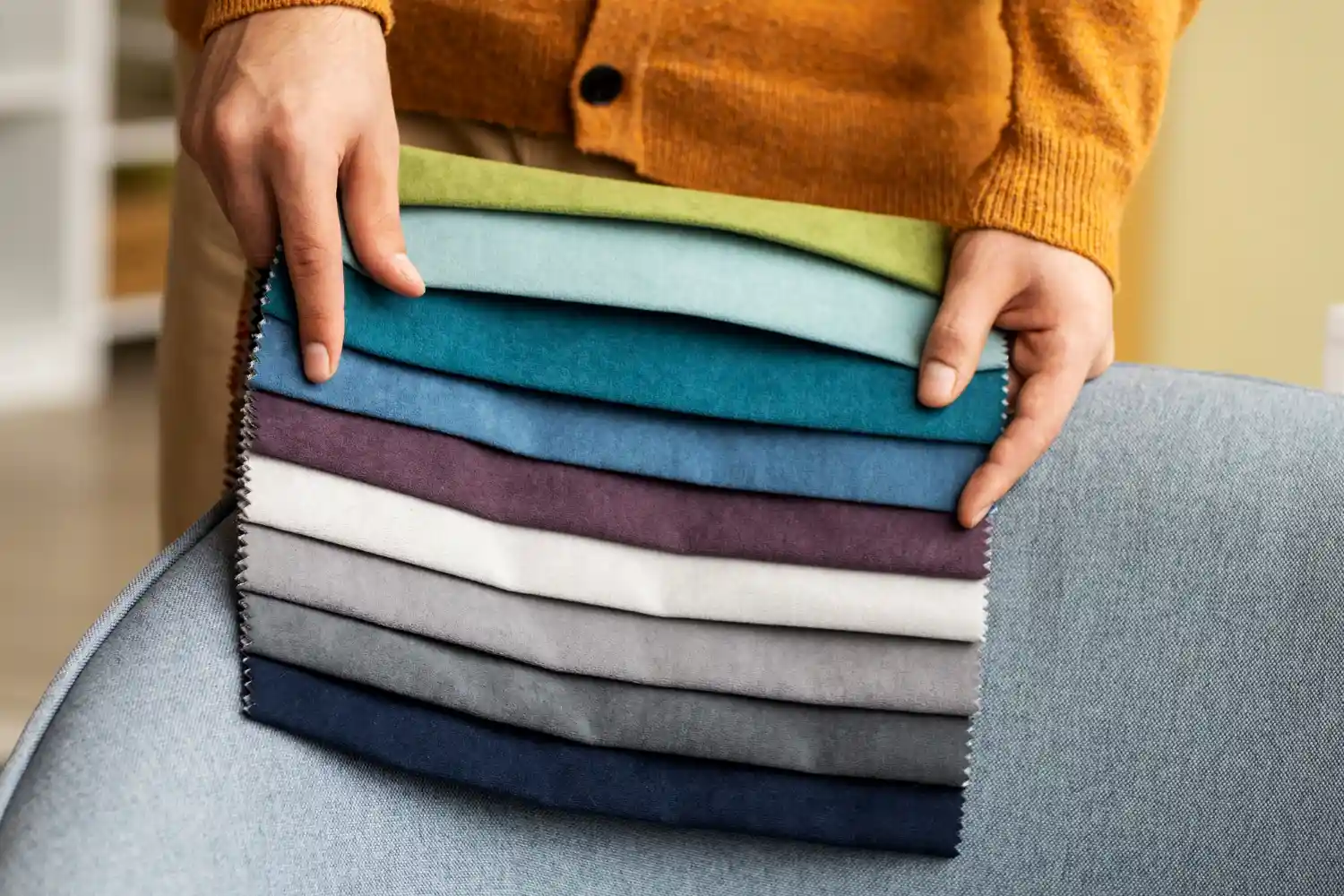
Everything above appears on the reverse of a restaurant chair fabric sample. Five lines carry most of the information.
Composition and Weight
Composition tells you how the fabric behaves before any test does. Polyester resists fading and abrasion, wool feels better and pills more, and nylon adds strength at the cost of a slightly synthetic hand.
Next, weight appears in grams per square metre. Heavier is not automatically better, although a very light cloth on a dining seat rarely survives, so treat anything under about 350 grams per square metre with suspicion.
Backing and Width
Coated fabrics list a backing, usually a knitted or woven fabric behind the face. A knitted backing stretches more, which suits curved and tightly upholstered shapes.
Furthermore, width matters at the cutting table. Most contract rolls run about 140 centimetres wide, and a narrower roll changes how many pieces the maker gets from each metre.
Cleaning Code
The card carries a cleaning code that tells your team which solvent the fibre tolerates. Record it with the order and pass it to whoever cleans the room, because using the wrong one leaves a permanent ring.
Our guide to cleaning restaurant chairs works through the codes and the nightly routine in detail.
Pattern Repeat and Railroading
A pattern repeat is the distance before the design starts again, given vertically and horizontally. Large repeats waste material, because the cutter has to align every piece.
Railroading means the pattern runs along the roll rather than up it. On long banquette backs a railroaded fabric removes the seams that a normal roll would force, so ask before you fall in love with a stripe.
Seam positions on fixed seating follow the module joints. Our guide to booth seating floor plans explains how those modules are set out from a site survey.
Matching Restaurant Chair Fabric to the Venue
The right restaurant chair fabric follows the service, the cleaning regime and the light. Start there rather than with the mood board.
Fast Casual and Family Dining
Choose a coated restaurant chair fabric and a high rub count. Spills arrive constantly, staff wipe quickly, and a woven face simply cannot keep up.
Look for a wipe-clean surface with a heavy backing and welded or double-stitched seams. Our indoor restaurant chairs ship with vinyl as the default covering for exactly these rooms.
Casual Dining and Bistro
This is polyurethane territory, or a woven cloth with a stain-release finish. Both give the room warmth without demanding a specialist cleaning routine.
Instead, mix by position rather than across the whole room. Coated seats and woven backs is a combination that works well, since seats take the spills and backs take the hands.
Fine Dining and Hotels
Comfort and appearance lead here, so woven contract cloth and corrected leather both make sense. Rub counts can be lower, although pilling and lightfastness grades should be higher.
Above all, plan for recovering rather than replacing. Our guide to matching restaurant chairs and tables covers how a covering reads against timber and stone in the same room.
Bars and Late-Night Venues
Alcohol, sanitiser and heavy use all point to coated coverings with proven chemical resistance. Ask specifically whether the covering tolerates alcohol-based products, since many do not.
In particular, bar stools wear at the seat front and the footrest edge. Our bar stool range lists the coverings we recommend for those positions.
Terraces and Conservatories
Outdoor work needs solution-dyed acrylic or a marine-grade coated fabric, plus quick-dry foam underneath. Ordinary restaurant chair fabric fails outdoors within one season.
Notably, conservatories are the trap. They feel indoor and behave outdoor, so specify the lightfastness of an outdoor restaurant chair even when the seating never leaves the building.
Upholstery specified for the room, not the catalogue
Contract woven, vinyl, polyurethane and leather coverings on timber and metal frames, upholstered to your fire and rub-count requirements.
Estimating Metreage and Ordering
Restaurant chair fabric is sold by the metre, and the metreage depends on the chair as much as on the cloth. A rough estimate early prevents a shortfall later.
How Much a Chair Takes
A seat pad alone usually takes around half a metre. A seat with an upholstered back takes closer to one metre, and a fully upholstered armchair often needs two or more.
So ask the maker for a per-chair figure rather than working from a rule. They cut the pattern, so their number is the one that matters.
Repeat, Direction and Waste
Add allowance for the pattern repeat and for directional fabrics. A large repeat or a one-way pile can add a quarter again to the total metreage.
Then add a wastage margin on top. Ten percent is normal, and it covers cutting loss, faults in the roll and the odd repair during the first year.
Dye Lots and Later Orders
Fabric is dyed in batches, and batches differ. Record the dye lot on the order, and buy the spares in the same lot rather than a year later.
Finally, keep two or three metres in storage. A single damaged seat then gets recovered invisibly instead of standing out in the run.
Foam, Backing and What Sits Underneath
Restaurant chair fabric only performs as well as the seat beneath it. Three components decide that.
Foam Density and Grade
Typically, density runs in kilograms per cubic metre, and contract seating usually sits between 30 and 40. Lower densities soften quickly, which shows as a dished seat within a year.
Meanwhile, firmness is a separate figure from density. Ask for both, because a dense but soft foam behaves very differently from a light but firm one.
Interliner and Fire Barrier
Many markets require an interliner between the covering and the foam. It changes the feel slightly and it is not optional where the regulation applies.
Webbing and Seat Platform
By comparison, rubber webbing gives a seat that flexes and stays comfortable. A plywood platform is firmer, simpler to make and much harder on a covering, since the fabric has nowhere to move.
Our comparison of dining chair materials covers frame construction, and the frame decides how much the seat flexes in the first place.
Recovering beats replacing, and only if you plan for it
A chair frame outlives its covering by a wide margin, so contract seating is normally recovered once or twice before it leaves the room. That only works when three decisions are made at the original order: a seat pad that unscrews rather than one stapled through the frame, a covering that is still in production a few years later, and a written record of the fabric reference, dye lot and cleaning code. Miss any of the three and recovering turns into replacing. Ask the maker to confirm all three on the order acknowledgement rather than assuming them.
Removable pads plus a recorded reference → two extra lives per frameColour and Texture in Service
Two coverings with identical test results can look very different after a year. The difference is how each one shows wear rather than how much wear it takes.
Why Mid Tones Wear Best
Very dark restaurant chair fabric shows dust, lint and pale food marks. Very light fabric shows everything else, particularly the shadow that builds where hands grip a back.
By contrast, mid tones and muted colours hide both. That is why so much contract seating sits in the grey, olive and tobacco range rather than at either extreme.
Texture Does More Than Colour
A flat weave shows every mark, while a textured or slubbed surface breaks up light and disguises small blemishes. Two-tone yarns work the same way.
Keep the texture shallow, though. A deep pile traps crumbs, and cleaning it nightly is more work than any dining room team will sustain.
Sheen and Lighting
Coated coverings reflect more light than woven ones, so a vinyl that looks rich under a showroom spotlight can read as plastic under warm pendants. Always view the sample under the lighting the room will actually use.
Generally, matt and lightly grained finishes flatter almost every scheme. High-gloss coatings photograph beautifully and show fingerprints from the first service.
Mistakes That Shorten Fabric Life
Each of these restaurant chair fabric decisions goes wrong regularly, and every one of them is settled before the order.
Buying on Rub Count Alone
Of course, abrasion is one failure mode among five. Read the pilling grade, the lightfastness and the seam slippage figure before you approve anything.
One Fabric for the Whole Room
Window runs, banquettes and bar positions all wear differently. Splitting the specification by position takes nothing at the order stage and keeps the room looking even.
Ignoring the Cleaning Regime
Whatever the closing team uses is what the covering meets every night. Choose the covering around that bottle, or change the bottle before the furniture arrives.
Approving a Sample Under the Wrong Light
Colour shifts dramatically between a showroom, daylight and a warm dining room at eight o’clock. Take the sample to the actual room, at the actual hour, before committing.
Forgetting the Fire Specification
Most markets certify fabric and foam together. Send both requirements to the maker at enquiry stage, since retrofitting compliance means rebuilding the seat.
Losing the Paperwork
The fabric reference, the dye lot and the cleaning code all belong in the same file as the invoice. Without them, a repair three years later becomes a guess.
FAQ
What Martindale rating do I need for restaurant chair fabric?
Aim for at least 40,000 cycles for general contract dining and 50,000 or more for fast casual, family and late-night venues. Hotel bedroom seating can drop to around 25,000, since the use is far lighter.
Is Martindale the same as double rubs?
No. Martindale uses a figure-of-eight motion and Wyzenbeek double rubs use a straight back-and-forth motion, and no reliable conversion exists between the two. Compare like with like and ask which test the card reports.
What is the difference between vinyl and faux leather?
Vinyl is a PVC face that cleans superbly and eventually hardens and cracks. Polyurethane faux leather is softer and more breathable, and it fails by peeling away from its backing instead.
Which covering is easiest to clean?
Vinyl, by a clear margin, because spills sit on the surface rather than soaking in. Polyurethane comes close, while woven fabric needs a stain-release finish to compete.
Does a high rub count mean the fabric will last longer?
Not on its own. Pilling, fading, seam slippage and the cleaning chemicals used in the room all end seat life regularly, and none of them appear in the abrasion figure.
How much fabric does one restaurant chair need?
Roughly half a metre for a seat pad, about one metre for a seat with an upholstered back, and two metres or more for a fully upholstered armchair. Add allowance for pattern repeat and about ten percent for wastage.
Can I supply my own fabric to the factory?
Usually yes. Confirm the roll width, the repeat, the fire certification and the metreage with the maker first, and send a cutting for approval before the bulk fabric ships.
What should I record when I place the order?
The fabric reference, the colour name, the dye lot, the cleaning code and the fire certification. Those five lines make a repair or a recovering straightforward years later.
More in this category