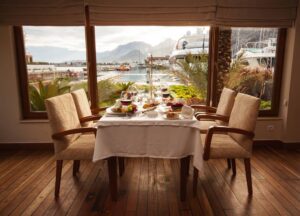


Ask ten suppliers what chairs a restaurant needs and you will get ten catalogues, because the honest answer depends on your service model, your floor area and how hard your room works each seat. This guide maps the types of restaurant chairs that commercial dining actually uses — side chairs, armchairs, bistro and stacking designs, stools and lounge pieces — with the dimensions, durability standards and selection logic that separate a chair that survives five years of service from one that wobbles by its first anniversary. Chairs are one half of a working dining room; the clearances around them are the other, so keep our guide to restaurant table spacing open alongside this one.
Restaurants run on seven core chair types: side chairs for density, armchairs for comfort and dwell, bistro chairs for café character, stacking chairs for flexibility, bar stools for counters, lounge seating for waiting areas, and fixed booth or banquette seating on walls. Specify contract grade throughout — domestic chairs fail commercial use within a year.
Contents
- The Main Types of Restaurant Chairs
- Frame Materials: Wood, Metal and Polypropylene at a Glance
- Matching Types of Restaurant Chairs to Your Service Model
- Commercial Grade vs Domestic Chairs: The Standard That Decides Lifespan
- Chair Dimensions and Ergonomics Guests Feel
- Buying Restaurant Chairs: Quantities, Spares and Lead Times
- FAQ
The Main Types of Restaurant Chairs
The side chair — armless, straight-backed, four legs — is the workhorse of commercial dining and the default answer to most seating questions. Its footprint is the smallest of any freestanding format, which is exactly why dense casual rooms are built on it: an armless frame tucks fully under the table, slides along banquette runs, and lets you hold tighter table spacing without guests climbing over each other. Wood side chairs read warm and traditional; metal frames read industrial and take more abuse; either way, this is the type you will buy most of.
The armchair trades density for dwell. Arms add 8 to 12 cm of width per chair and stop the frame tucking fully under most tables, so every armchair costs you floor area — but guests sit longer, order more courses and rate comfort higher in them. The standard commercial pattern puts armchairs at feature tables, window positions and fine-dining rooms where the extra centimetres are already budgeted, and side chairs everywhere the grid is tight. Check arm height against your table apron before ordering: arms at 65 cm meeting an apron at 63 cm is the most common specification collision in the business.
Bistro and café chairs are a character family more than a structural one — lightweight frames, often metal or bentwood, frequently stackable, descended from Parisian pavement cafés. They suit daytime trade, tight terraces and anywhere the furniture is moved daily. Stacking chairs proper are the events workhorse: engineered to stack eight or ten high on a trolley, they turn a dining room into a function space in twenty minutes. Their compromise is visible — stacking geometry constrains comfort and looks — so most operators keep them for overflow and private-room flexibility rather than front-of-house identity.
Bar stools serve counters, high tables and window rails at 65 or 75 cm seat heights, and their spacing runs on shoulder width rather than pushback — a different calculation we cover in how many bar stools you need. Lounge and accent seating — low armchairs, small sofas — earns its space in waiting areas and bars where guests hold a drink rather than a plate. And fixed seating completes the taxonomy: booths and banquettes are chairs’ permanent siblings, dense and immovable, compared fully in our guide to booth and banquette seating.
| Type | Width footprint | Stackable | Best venue | Watch for |
|---|---|---|---|---|
| Side chair | 42–47 cm17–19 in | Some models | Casual dining, banquette fronts | Seat comfort at long dwell |
| Armchair | 55–62 cm22–24 in | Rarely | Fine dining, feature tables | Arm height vs table apron |
| Bistro / café | 40–45 cm16–18 in | Often | Cafés, terraces, daytime trade | Frame fatigue if moved daily |
| Stacking chair | 45–50 cm18–20 in | Yes — 8–10 high | Events, private rooms, overflow | Comfort ceiling, stack scuffs |
| Bar stool | 38–45 cm15–18 in | Some models | Counters, high tables | Footrest wear, floor fixings |
| Lounge / accent | 65–85 cm26–33 in | No | Bars, waiting areas | Floor area per cover |
Frame Materials: Wood, Metal and Polypropylene at a Glance
Material choice runs across every type above, and it changes price, weight, lifespan and cleaning in one decision. Solid wood — beech and oak dominate commercial frames — delivers warmth, repairability and a quality signal guests register instantly; its cost is weight, price and sensitivity to outdoor conditions. Metal frames in steel or aluminium take the hardest daily abuse, stack well, and suit industrial and outdoor-adjacent looks; aluminium’s light weight makes it the terrace default. Polypropylene and other moulded plastics own the value end and the outdoor pool deck: colour-fast, hose-downable, stackable and cheap to replace, at the cost of a shorter style life and a more casual read.
Upholstery sits on top of any frame and changes the calculation again — a padded seat adds comfort and acoustic softening, and adds a fabric specification you must get right. The short version: contract-grade fabric rated 40,000+ Martindale cycles or wipeable vinyl for high-turnover rooms, and never domestic fabric anywhere commercial. The long version, including how each frame material ages and which combinations suit which venues, is in our dedicated guide to dining chair materials and their pros and cons — we keep the deep dive there so this page can stay focused on choosing between types.
One material rule applies everywhere: match the material to the cleaning regime you will actually run, not the one you intend to run. A white fabric side chair in a family diner is a specification error no matter how good the fabric is; a dark vinyl seat in the same room shrugs off five services a day. Materials fail at the intersection of traffic and maintenance, and the supplier who asks about your cleaning schedule before quoting is the one taking your durability seriously.
Armchairs in a side-chair grid break the layout
Swapping side chairs for armchairs after the floor plan is fixed is the quiet layout killer we see most. Each armchair adds up to 12 cm of width and refuses to tuck under the table, so a row planned at side-chair dimensions loses its aisle the day the armchairs arrive. Decide the chair type per zone before the spacing plan is drawn — not after the furniture budget gets an upgrade.
+8–12 cm per chair × 20 chairs = one lost aisleMatching Types of Restaurant Chairs to Your Service Model
Turnover time is the first filter. Quick-service and fast-casual rooms want chairs guests sit comfortably in for thirty minutes — firm seats, easy wipe-down, light enough for staff to reset fast; side chairs and bistro frames in metal or polypropylene fit the brief exactly, and expensive lounge comfort would actively work against the model. Mid-dwell casual dining adds padded seats and a proportion of armchairs at feature positions. Long-dwell fine dining inverts the logic: comfort becomes the product, armchairs and upholstery earn their space, and the seat that encourages a third course pays for itself.
Then filter by room zones rather than buying one chair for everything. A working room typically mixes three to four types: side chairs across the main floor, armchairs at anchor tables, stools at the bar, and a stacking reserve for functions. The mix is also your capacity insurance — pairs of side chairs move to combined tables in seconds, while a room of armchairs resists every reconfiguration. Outdoor zones get their own specification entirely: UV-stable finishes, drain-friendly seats and frames rated for weather, chosen from the outdoor ranges rather than indoor chairs pushed through the door each morning.
Aesthetics come last in the filter order, not because looks matter less but because a chair that fails the service model fails regardless of its looks. Within any type you can hit almost any visual brief — industrial metal, mid-century timber, contemporary moulded shells — so lock the functional envelope first: type, dimensions, stackability, material family, upholstery grade. Then choose the design language freely inside it. Operators who reverse the order end up with beautiful chairs stacked in a storeroom, replaced by whatever worked.
Commercial Grade vs Domestic Chairs: The Standard That Decides Lifespan
The phrase “commercial grade” has a testable meaning, and it is the single most important line on a chair specification. Contract seating is built and tested for continuous public use: reinforced joints, higher-density foams, fabrics rated for tens of thousands of abrasion cycles, and frames certified against standards such as ANSI/BIFMA X5.4 for commercial seating strength and durability — the test regime is summarised on the BIFMA standards overview. A domestic chair, however handsome, is engineered for a few hours of family use a week. Put it through forty covers a day and the joints loosen in months.
The arithmetic favours contract quality even before the first repair bill. A domestic-grade chair at half the price that fails in twelve to eighteen months costs more per year of service than a contract chair that runs five to seven years — and that is before counting the disruption of mid-trading replacement, mismatched reorders when the cheap line is discontinued, and the brand damage of a guest on a wobbling seat. Warranty tells you what the maker believes: contract suppliers routinely stand behind five years of commercial use; domestic warranties exclude commercial use entirely, which is the quiet confession in the small print.
Cost per year of service, not cost per chair
A domestic chair at half the unit price replaced every 18 months costs roughly twice as much per year of service as a contract chair that runs six years — before repairs, re-orders and the labour of swapping furniture mid-trading. Divide every quote by realistic years of commercial service and the cheap option rarely survives the arithmetic.
½ price ÷ ¼ lifespan ≈ 2× annual costChair Dimensions and Ergonomics Guests Feel
Four numbers govern whether a chair feels right at a standard 75 cm (30 in) dining table. Seat height: 45 to 47 cm (18 in), giving the 26 to 30 cm seat-to-tabletop gap that comfortable dining runs on. Seat depth: 40 to 45 cm — deeper reads as luxurious and traps shorter guests. Seat width: 42 cm as a practical minimum for commercial use. Back height: 80 to 95 cm overall for dining chairs, with the lumbar area doing the real work. Chairs that miss these numbers make a correctly spaced room feel wrong in ways guests cannot name — they just do not settle.
Ergonomics extends past the chair itself into the grid it sits in. A chair occupies 46 to 51 cm of depth when tucked and needs 30 to 36 cm of pushback to release a guest, which is why chair choice and table spacing are one decision, not two — the full clearance mathematics lives in our restaurant table spacing guide. Weight belongs in the ergonomic file too: staff lift chairs hundreds of times a week, floors collect the evidence of frames dragged rather than lifted, and a 4 kg aluminium frame against a 7 kg oak one is a genuine operational difference across a year of services. Glides matter last and always — nylon or felt to suit the floor, checked and replaced on schedule, because a missing glide converts a good chair into a floor-scoring liability.
Restaurant chairs built for commercial service
Side chairs, armchairs and bistro frames in wood and metal — contract grade, made in Turkey.
Buying Restaurant Chairs: Quantities, Spares and Lead Times
Order more chairs than seats. The working rule is 5 to 10% spares on top of the floor count: chairs rotate out for cleaning and repair, accidents happen mid-service, and a discontinued model two years in leaves you matching finishes across suppliers — the spare stock you bought on day one is the cheapest insurance you will ever hold. Spares also smooth refurbishment later: re-upholstering in waves of ten while spares fill the gaps keeps the room trading through the whole cycle.
Plan the timeline like the fit-out it is. Contract chairs are frequently made to order — frame finish, seat material, upholstery grade all specified — and production plus shipping runs weeks, not days, especially on imported joinery-quality work. Confirm the critical path early: samples first, then the bulk order with a delivery date tied to your opening plan, with the sample chair doing real work — sat on, measured against your tables, wiped with your actual cleaning chemicals. Operators outfitting on tight budgets should also read our notes on low-budget small restaurant design; the savings that survive scrutiny are rarely the ones taken on chair quality.
Test one sample chair before the container ships
Order a single unit of your specified chair before releasing the bulk order. Sit in it through a full meal, tuck it under your actual table, check arm clearance against the apron, weigh it, and clean it with your own products. A sample costs one chair and two weeks; a container of chairs that fight your tables costs the opening date.
1 sample chair vs 1 delayed openingFAQ
What types of chairs are used in restaurants?
Commercial dining runs on seven core formats: side chairs, armchairs, bistro and café chairs, stacking chairs, bar stools, lounge seating and fixed booth or banquette seating. Most working rooms mix three or four types — side chairs across the main floor, armchairs at feature tables, stools at counters and a stacking reserve for events.
What is the best chair for a restaurant?
The side chair, for most rooms: smallest footprint, tucks fully under the table, works at tight spacing and suits every style language. Upgrade to armchairs where dwell time and comfort drive revenue, and to stacking frames where flexibility matters more than looks. There is no best chair — only the best match to your service model.
What seat height should restaurant chairs be?
45 to 47 cm (18 in) for a standard 75 cm (30 in) dining table, leaving the 26 to 30 cm gap between seat and tabletop that comfortable dining depends on. Counter seating runs at 65 cm and bar seating at 75 cm — and mixing heights within one table position is the error guests notice immediately.
What is the difference between commercial and domestic chairs?
Engineering and testing. Commercial (contract) chairs carry reinforced joints, high-density foam and fabrics rated 40,000+ Martindale cycles, tested to standards like ANSI/BIFMA X5.4 for continuous public use. Domestic chairs are built for a few hours of weekly use, and their warranties typically exclude commercial settings outright.
Are stackable restaurant chairs worth it?
As a flexible reserve, absolutely: they convert dining space into function space in minutes and store eight to ten high on a trolley. As the main floor seating, only in high-turnover venues — stacking geometry caps comfort, and stacked frames scuff each other, so front-of-house identity usually deserves a non-stacking primary chair.
Should restaurant chairs be upholstered?
Where dwell time matters, yes — padding lengthens comfortable sitting and softens room acoustics. Specify contract fabric of 40,000+ Martindale cycles or wipeable vinyl for high-traffic rooms, never domestic fabric. Quick-service venues usually skip upholstery entirely for wipe-down speed and durability.
How many chairs should I order for a new restaurant?
Your seat count plus 5 to 10% spares. The extras cover cleaning rotation, mid-service accidents and — most valuably — matching stock after your model or finish is discontinued. Ordering spares with the original batch guarantees colour and batch consistency no later re-order can.
How much do restaurant chairs cost?
Commercial pricing spans a wide range by frame material, upholstery and order volume — but judge every quote as cost per year of service, not per unit. A contract chair running five to seven years beats a half-price domestic chair replaced every eighteen months in every honest calculation.